Exploring Jozi
A visit to Shayona’s restaurant (which is more of a low-key café) at the small Hindu Temple in Mayfair, a south-western suburb of Johannesburg, galvanized our merry band of excursionists to visit the much larger Hindu cultural complex in Northriding.
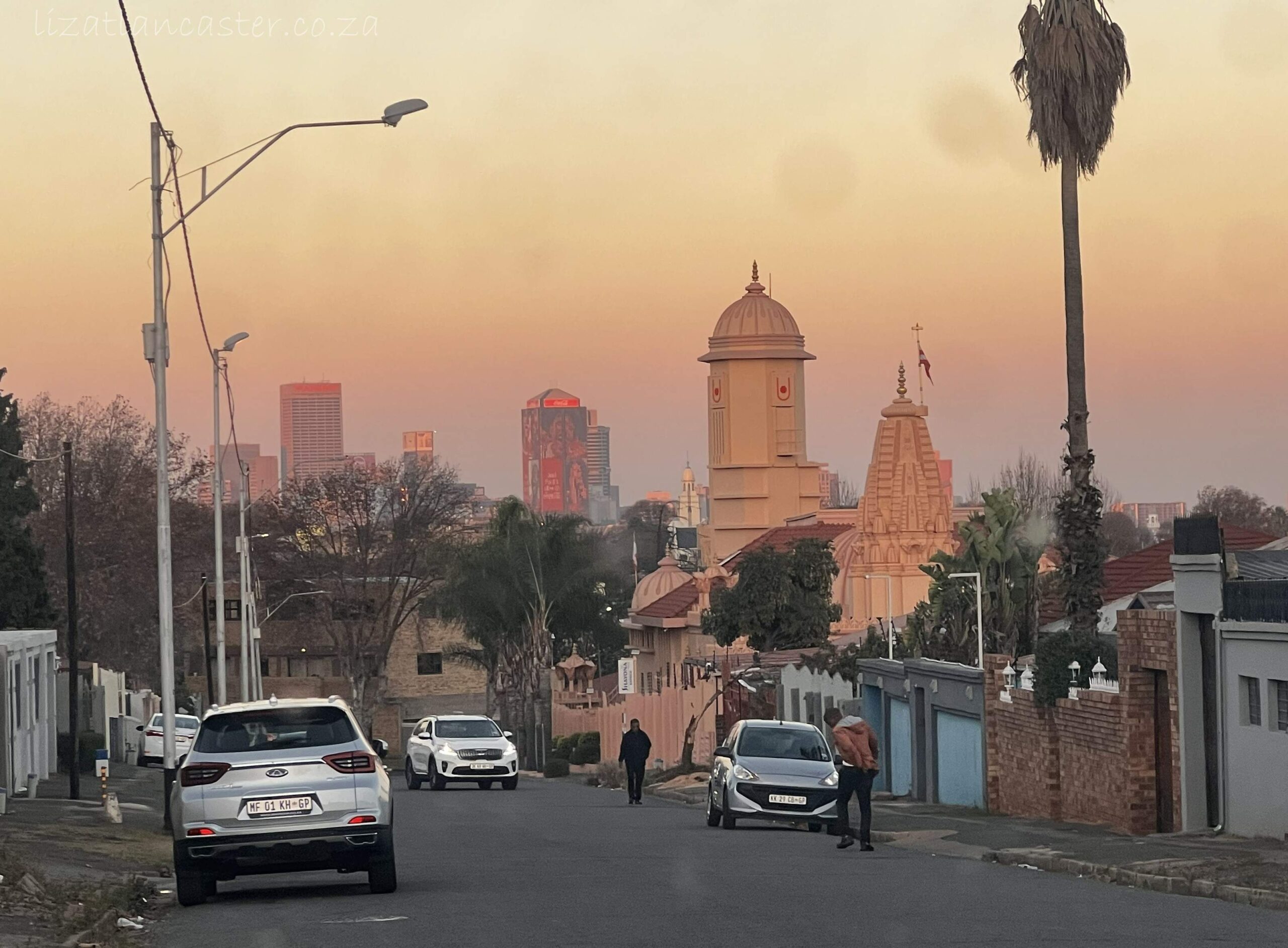
BAPS Hindu Mandir and Cultural Complex in Northriding, Johannesburg
Going by the already challenging full name of the BAPS Shri Swaminarayan Mandir and Cultural Centre, if you extend the initials of BAPS to the full Bochasanwasi Akshar Purushottam Swaminarayan Sanstha, it’s enough to twist the tongue of even the most sophisticated linguist into a permanent super-glued knot.
- Bochasan is the name of the village in India where the first BAPS temple was built
- Akshar refers to the Supreme Being’s ideal devotee and manifestation of God on earth
- Purushottam is God or Supreme Being
- Swaminarayan is one of the gods worshipped by BAPS
and Sanstha means organization.
BAPS is a global organization with over 1300 mandirs (temples) around the world. More than simply a religious institution, BAPS promotes spirituality, culture, youth development and social upliftment, and humanitarian service. It is a meeting place, a learning place, a place of inclusion, community and home, and we experienced all this, both during our initial visit and when we attended a service.

The temple complex
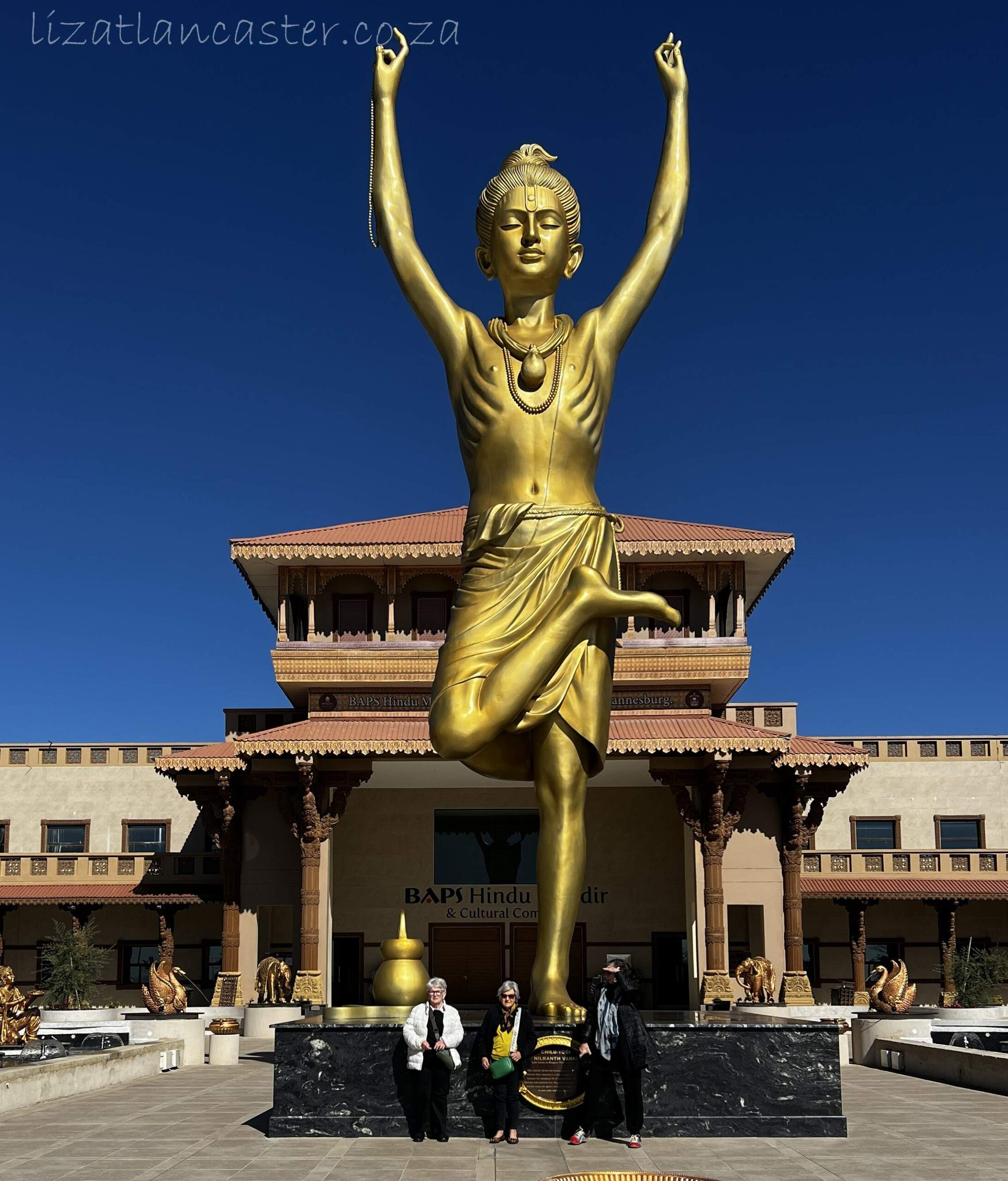
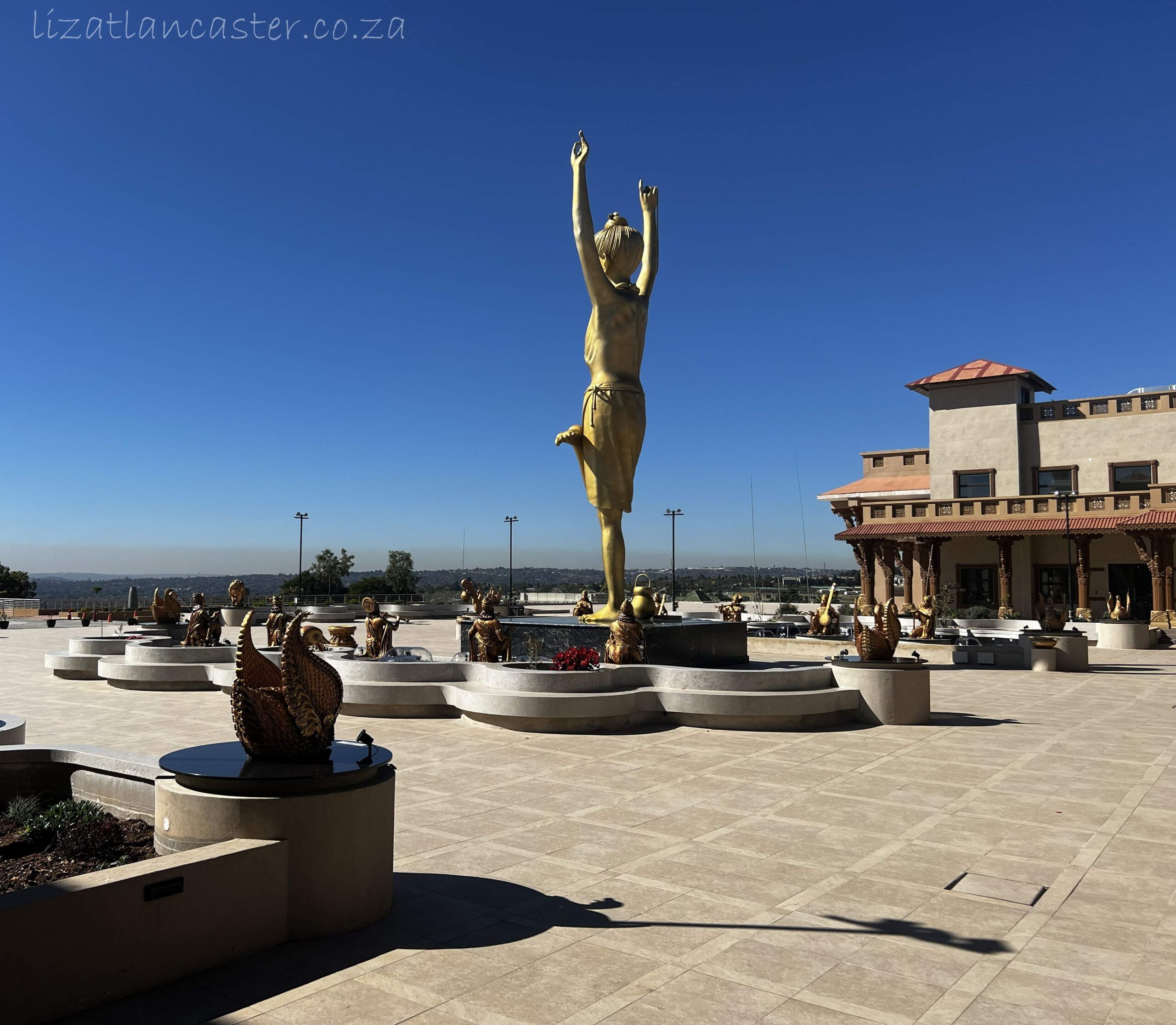
Arriving at the entrance courtyard to the temple is quite breathtaking. The scale of the complex is probably the first thing that strikes one. It covers 14 acres (2,500 square meters). The visitor is immediately confronted by the massive 14.5 m 20-ton brass murti (sculpture) of Neelkanth (or Nilkanth) Varni, the childhood name for Bhagwan Swaminarayan. (Bhagwan means holy or divine and is the title used for dieties). Leaving home at 11, Nilkanth Varni is said to have travelled 12000 km through India dedicating his 7 years travels to penance, discipline and service.
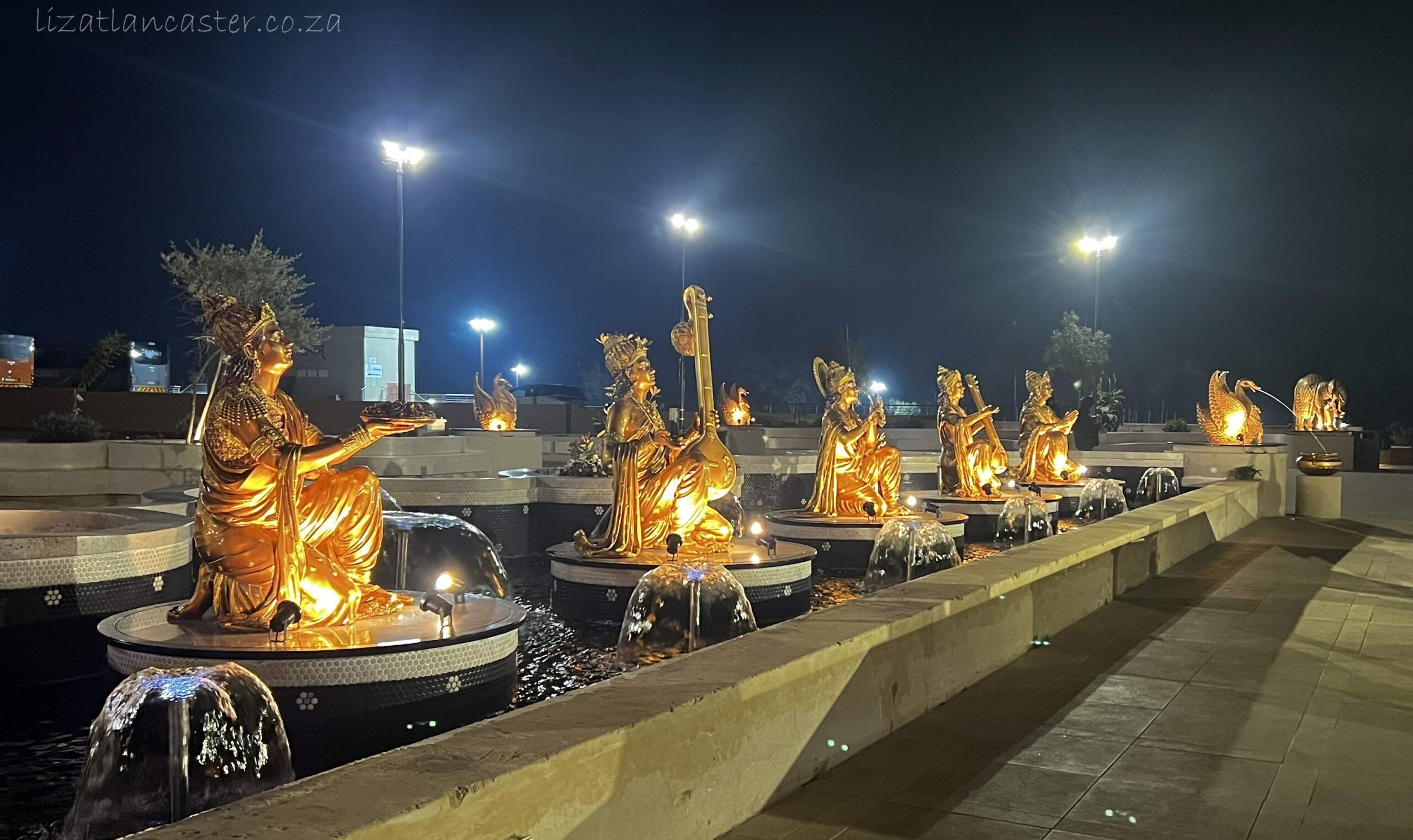
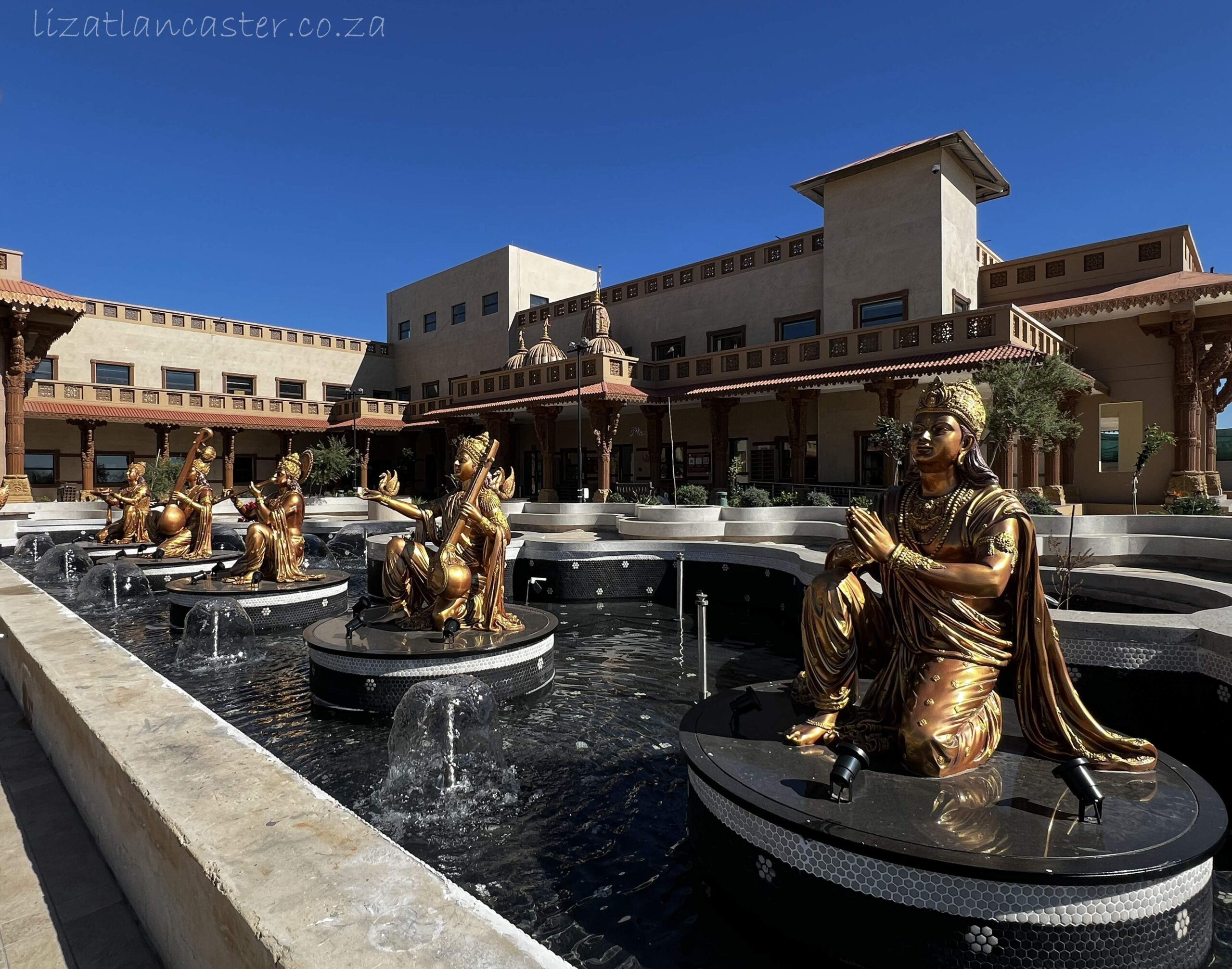
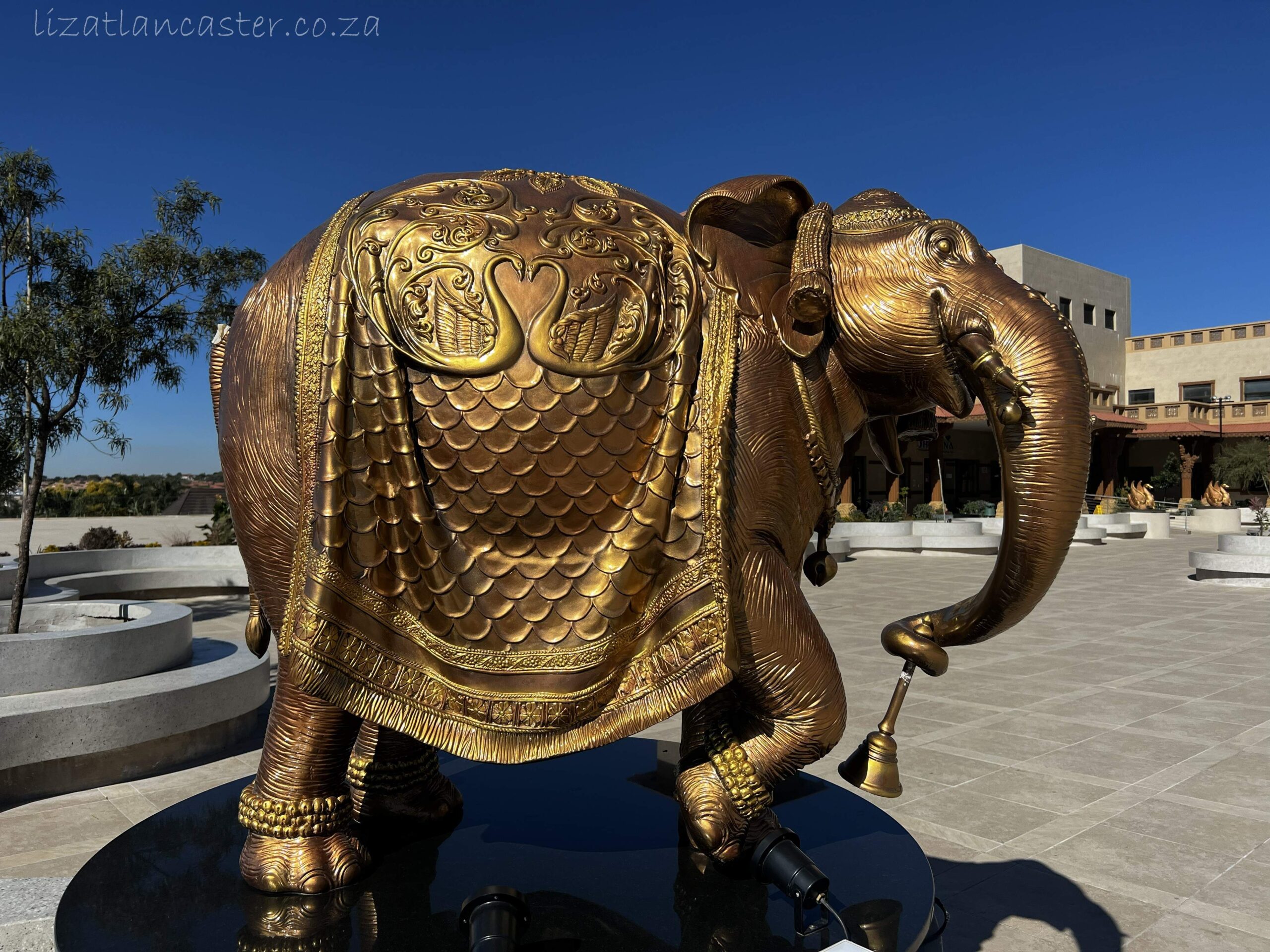
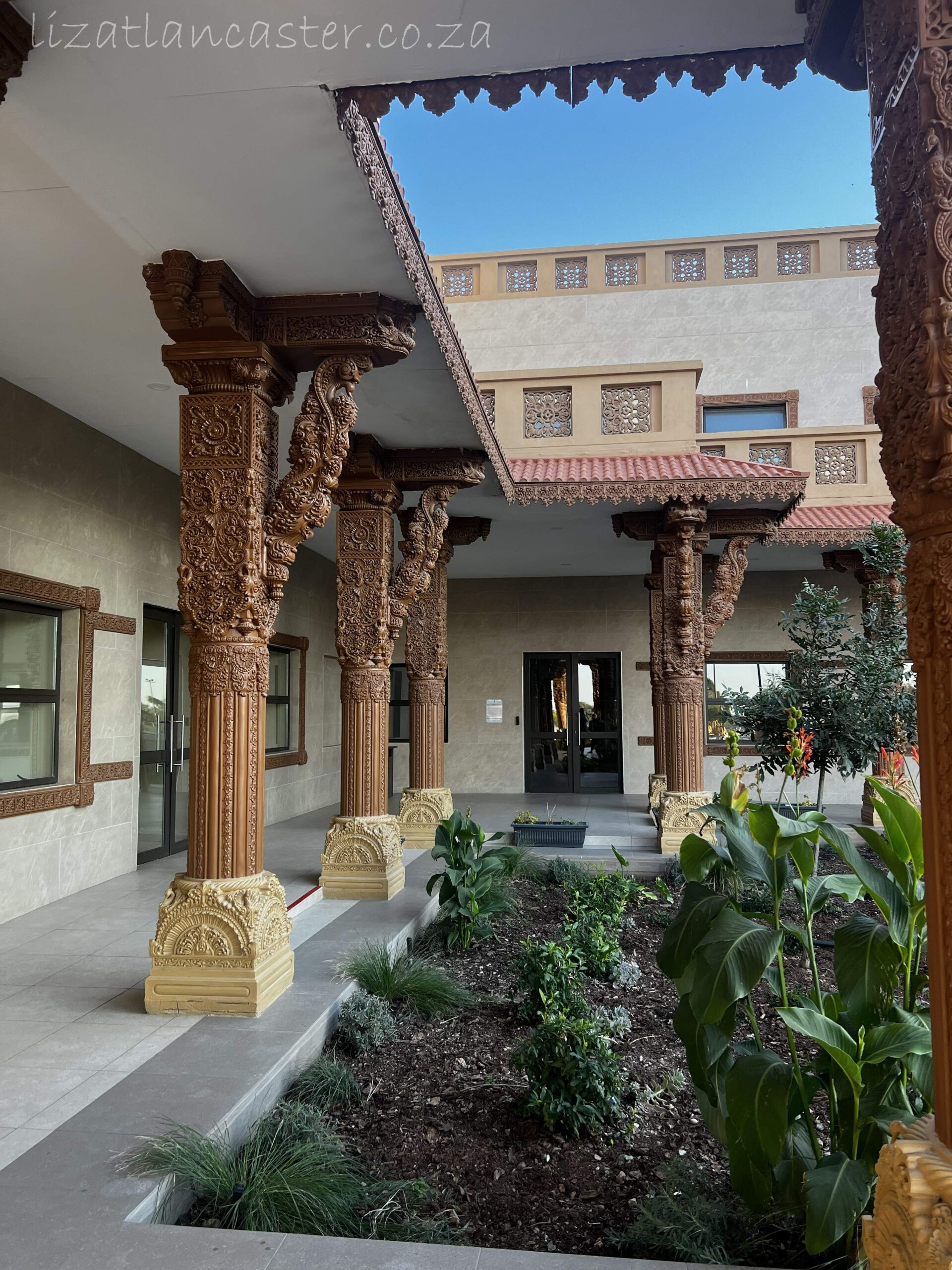
The large courtyard has a central axial approach to the temple complex entrance, flanked by sculptures and fountains.


Inclusive, accessible and celebrating life
I have been fortunate enough to travel to India, so have experienced Hindu temple spaces while also trying to grapple with the various different deities and tenets of Hinduism. The complexities of the different branches of Hinduism, the many deities all with multiple names, strong Indian accents and the confusing (for Westerners) head waggle of “yes, no, maybe”, all provided a challenge to sustained and informed understanding! So it was a special experience to visit the BAPS temple and to have met Jaydev who, in guiding us through the complex and the temporary temple space, helped provide a Hinduism 101 crash course for us. He embodied a lot of what Hinduism seems to be about. In a sweeping simplified “outsiders” summary, along with a clear commitment to spiritual growth, Jaydev emanated a gentleness, an inclusiveness, a generosity of spirit, a caring for animate beings, an acceptance of difference, and a deep concern for family and community.
Despite the huge scale of the complex which in our initial visit, was virtually empty, the courtyard space is not a dominating oppressive space. Its physical openness speaks to a metaphorical openness, the water features lend a tranquility and, apart from the central massive murti, the other devotee figures are human scaled. The high elevation with the view over Sandton, also gives a sense of expansiveness rather than closure.
It was clear from all the different parts of the complex: huge function room, massive auditorium, sports centre, classrooms, temple space that this is a socio-spiritual space where religious life is integrated with community life, devotion is twinned with humanitarian service and community involvement.
Hinduism 101 – with sincere apologies to those far more knowledgeable than I am
Interestingly, unlike the monotheistic religions and Buddhism, Hinduism has no single founder as such. It developed gradually as a cultural and spiritual tradition drawing on the early Vedic texts. In my usual dilettantish thinking, it seems to make sense to me that the lack of a single founder, along with the gradual accretion of different influences, allowed and indeed encouraged a diversity which set Hinduism on a path of being “a way of life” rather than a strictly organized and institutionalized religion.
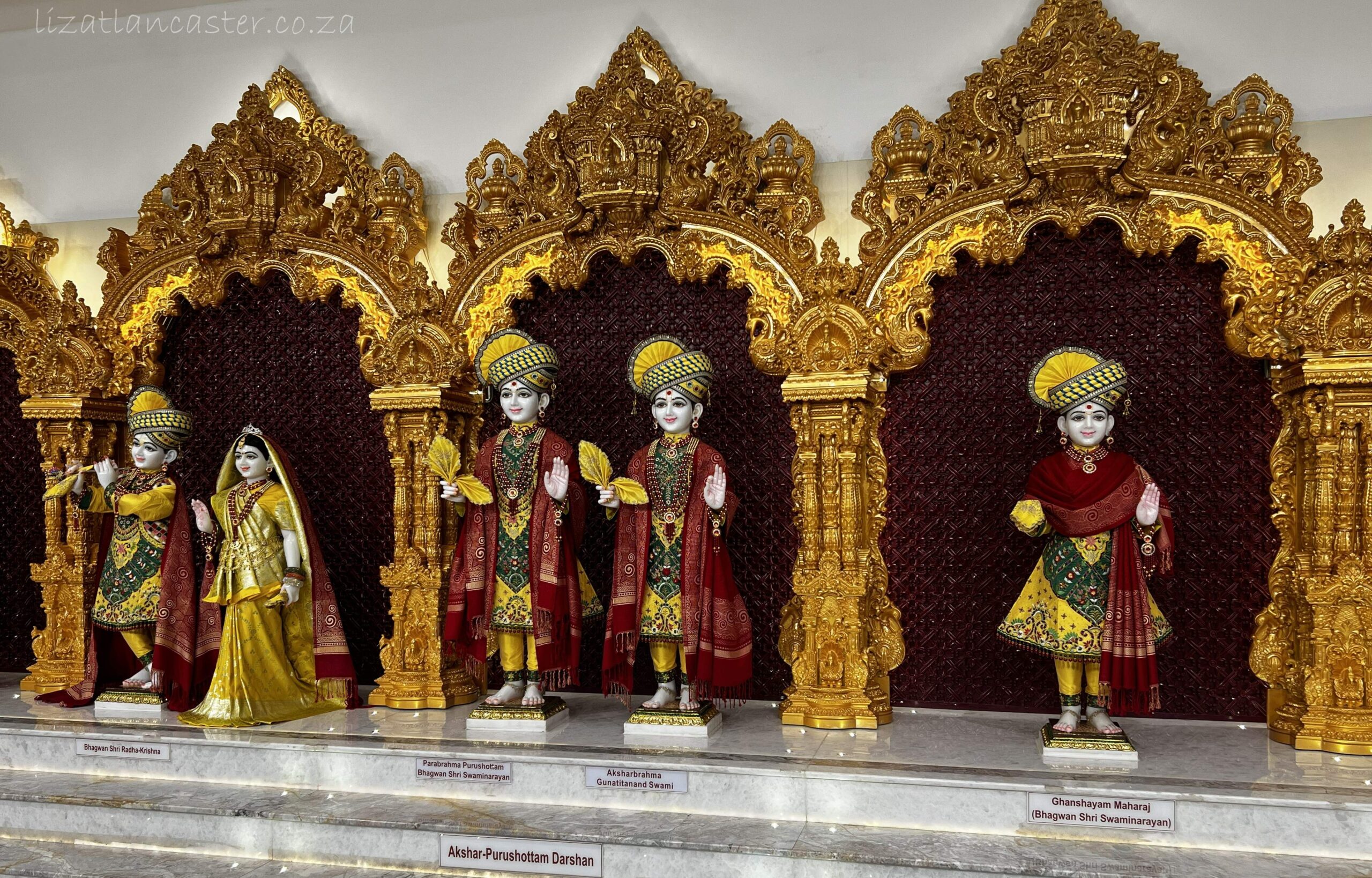
Even to a non-Hindu, there is a very human and accessible ‘face’ to Hinduism. This despite the multitude of deities, their equally multiple and convoluted names and relationships, the dense philosophies and teachings of the scriptures, and the complexities of the many branches of Hinduism. The link between the earthly and divine is embodied in the way the gods at Darshan are treated like humans. They are fed, clothed, put to sleep at night. Even animals have divine attributes and interweave the earthly and the spiritual realms.
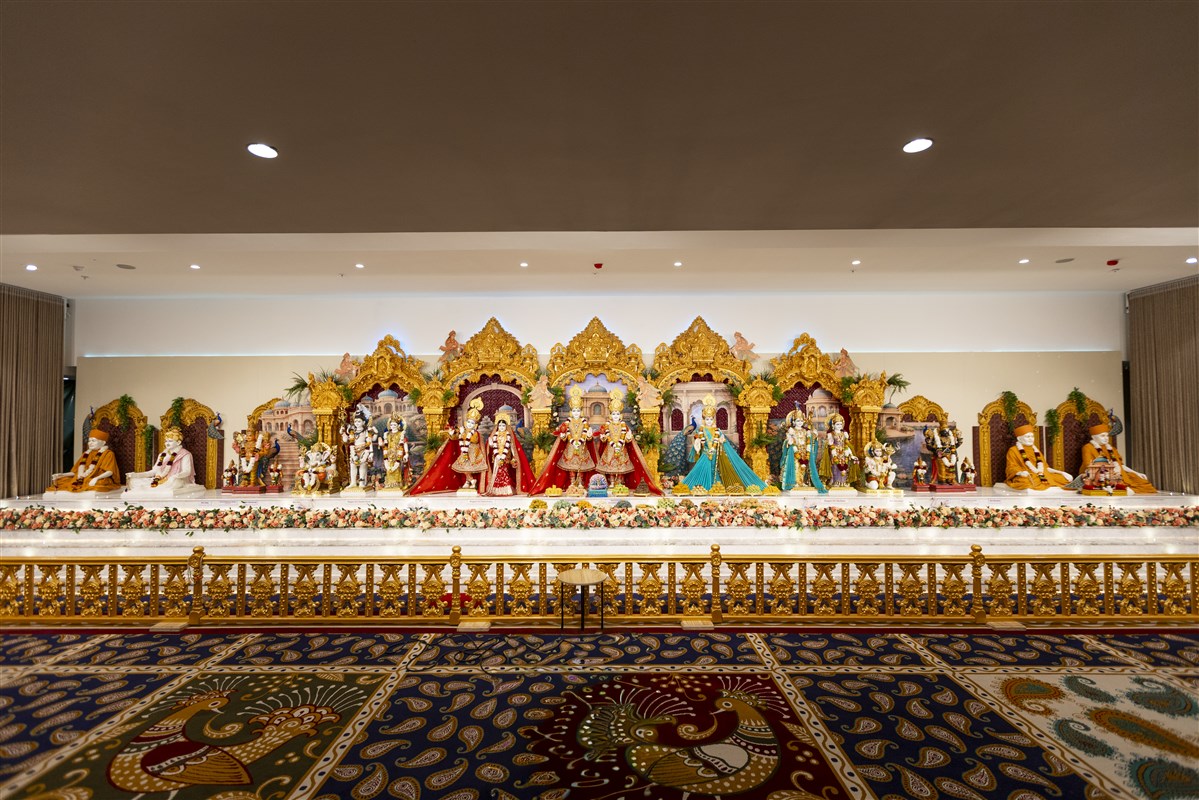
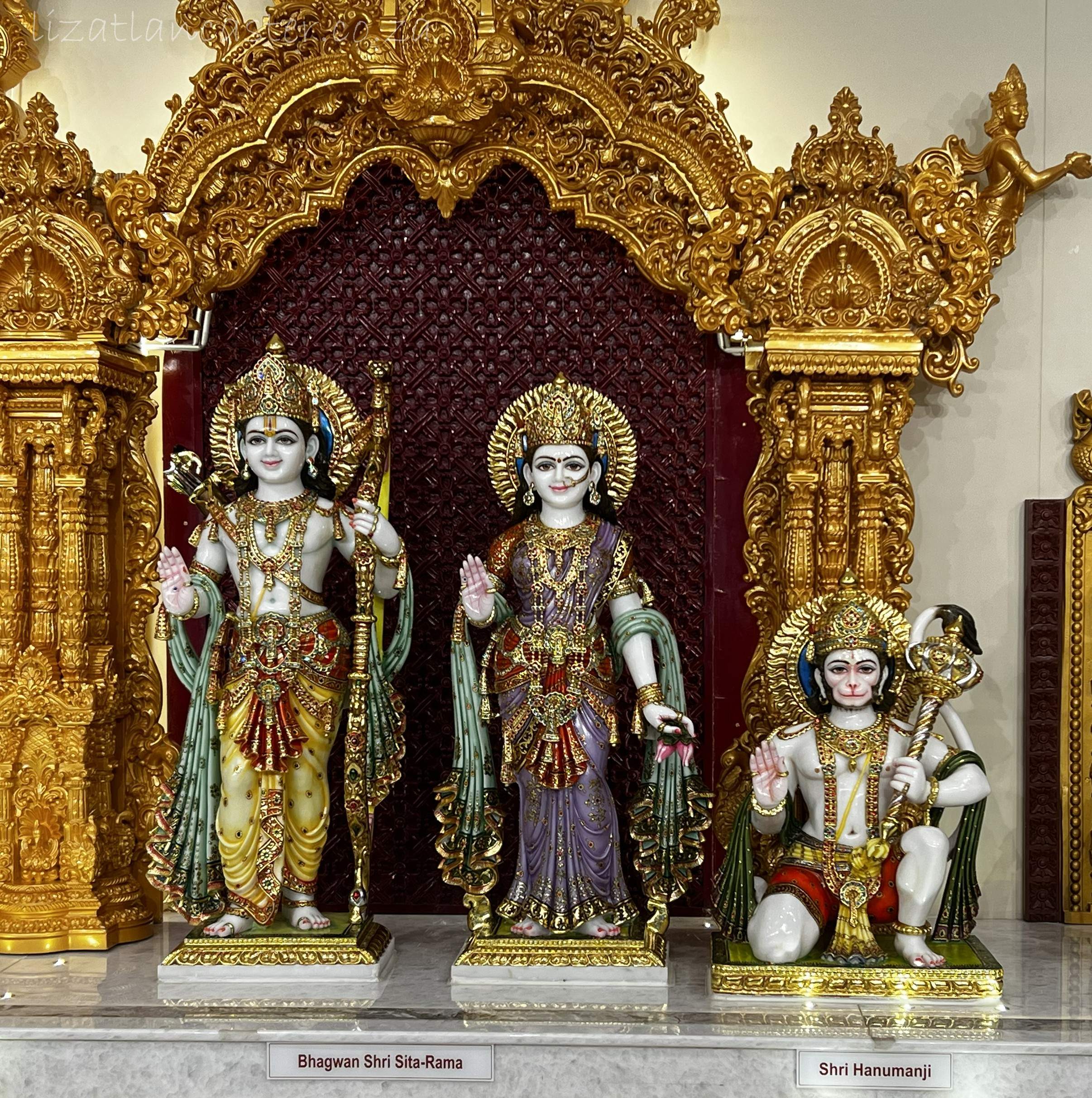
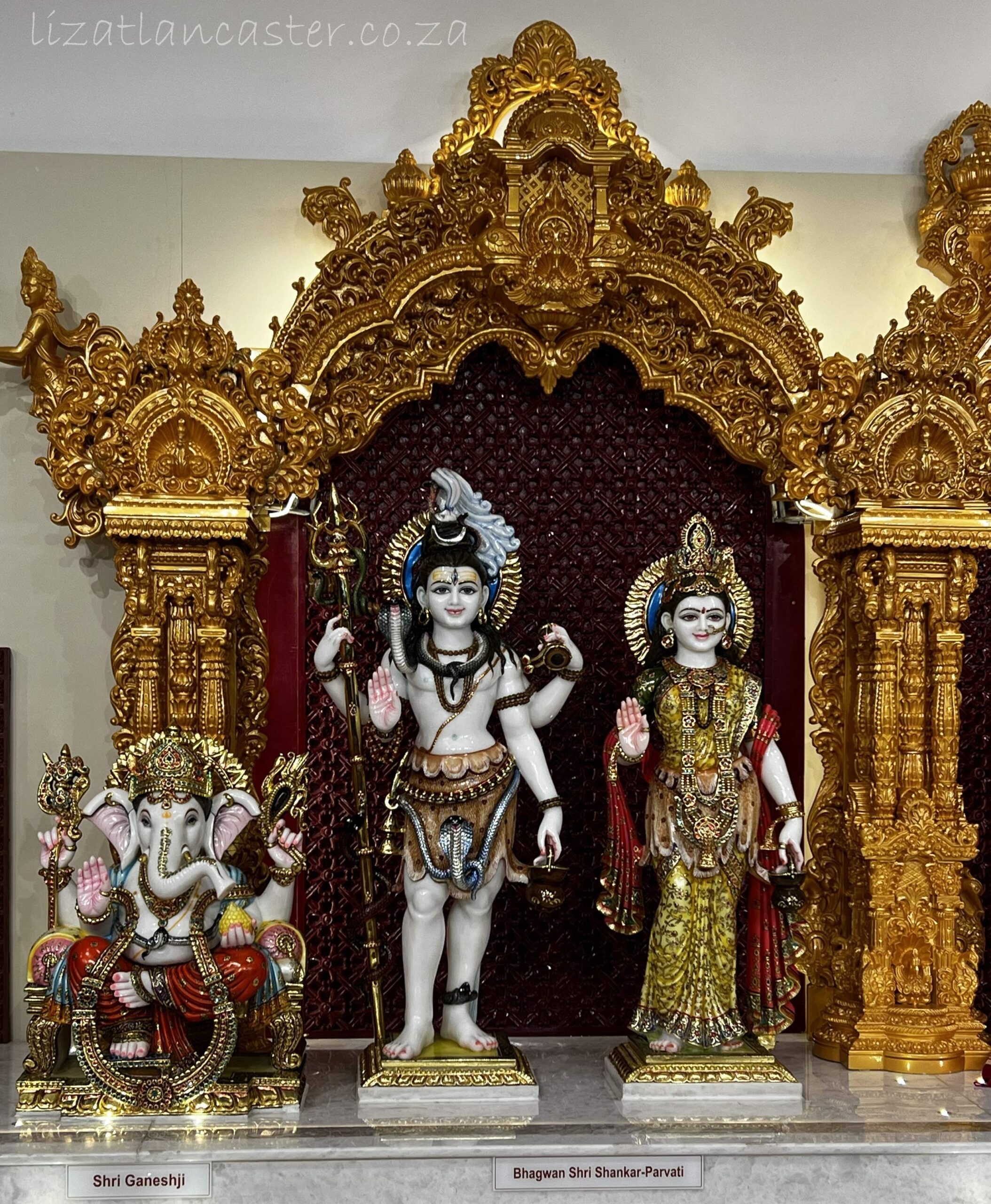
Similarly, the aesthetic of bright colours and the abundant detail invite a celebration of life on earth, an honouring of the senses. Although as the subject of the sermon at the service we attended made clear, the senses always need to be kept in check in order to enable spiritual growth and to effectively manage desires. The Bhagavad Gita, the text which is probably most well-known to non-Hindus, is one of the many Hindu scriptures which talks about the importance of keeping the senses under control.
Another thought is that because the current leader of the organization names his successor, there is no power struggle in the handover. As Jaydev said “Because there is no distracting politicking, we can all get on with the work we are here to do”. There is a lot to be said for a smooth continuity in the handover of leadership.
And finally, we had two meals at Shayona’s. Both were delicious and extraordinarily reasonable. Apparently, it’s a not-for-profit organization and all profits are channeled back into community initiatives. We come back to that recurring concept of community, giving back, doing good. And of course, a final tenet for most Hindus – do no harm to animate beings. So Shayona’s is vegetarian.
A wonderful interesting, enriching and enlightening experience all round. Thank you to Jaydev and family and all who welcomed us into your broader social and spiritual family.