
Is it useful? Is it true? Is it good?
The story goes that Euclides, a student of Socrates, came to the Great Master to tell him of talk he had heard in the agora, talk he felt Socrates should know.
Socrates said to Euclides: “Before you tell me anything, is what you are going to tell me useful?”
“Well, maybe not,” said Euclides.
“Well then is it true?”
“I’m not sure, I have been told so, but I can’t say,” admitted his student.
“Well then is it good?”
“Definitely not” came back the answer.
“Well then “, said Socrates, “do not repeat it to me “
And that is why Mr. Socrates never found out that Mr. Plato was having an affair with Mrs. Socrates.
So what has this bit of apocrypha got to do with Homecoming, the exhibition of 145 odd outstanding works from the Johannesburg Art Gallery, on show at the Standard Bank Gallery until end October 2026.
Johannesburg Art Gallery – What can I say that is “good”?
There are many positive things to say. The collection itself is astonishing – both in its range of international historical and contemporary artists, to the size of the collection– some 9000 works. Also remarkable is the original building, which faced south on to the City, designed by Lutyens and opened to the public in 1915; the Meyer Pienaar 1980 north-facing extension opening up the gallery onto to the Park; the role the gallery library played in providing educational resources for art students; the break from collecting traditionally white-only artists, starting with the groundbreaking exhibition The Neglected Tradition in 1988; and in the last few decades the tireless defence and fighting for the survival of the collection and the building by the Friends of the Gallery, the Johannesburg Heritage Foundation, and others.
BUT …..
The tragic decline of the gift to the people of Johannesburg
While I hope I write in a rigorous and critically informed way, I avoid writing about bad experiences or expressing negative opinions in my blog posts. I don’t see myself as a reviewer, but rather as a spreader of information about Jozi and all it has to offer, what Gladwell of Tipping Point fame, calls a “maven”. If something is really “bad”, I just avoid writing about it. In the case of JAG, although I have been sorely tempted to write about a visit in 2024, I have left it to the widespread outrage from others who have the facts on the shocking demise of the Gallery – both the building and the good governance of the institution. And who have been taking legal action to intervene and mitigate further damage.
However, the exhibition Homecoming comprising some of JAG’s art collection and showing currently at the Standard Bank Gallery, proved too much for me. Too much because of the silence in and around the exhibition of the role of the tireless JAG campaigners; too much because of any lack of reference to the damaged state of the Art Gallery and subsequent lack of care of the collection; too much because of the lack of curatorial transparency; and too much because of the problematic populist rewriting of history that the curating of HomeComing constructs.
The building is in shocking disrepair
The building itself has been almost willfully neglected, with insufficient money spent on repairs and maintenance: the roof leaks, water damage is rampant, entire wings are closed, storage rooms are full of damp and mould. The Friends of JAG and the Johannesburg Heritage Foundation have campaigned tirelessly to mitigate further damage to the building and the collection.
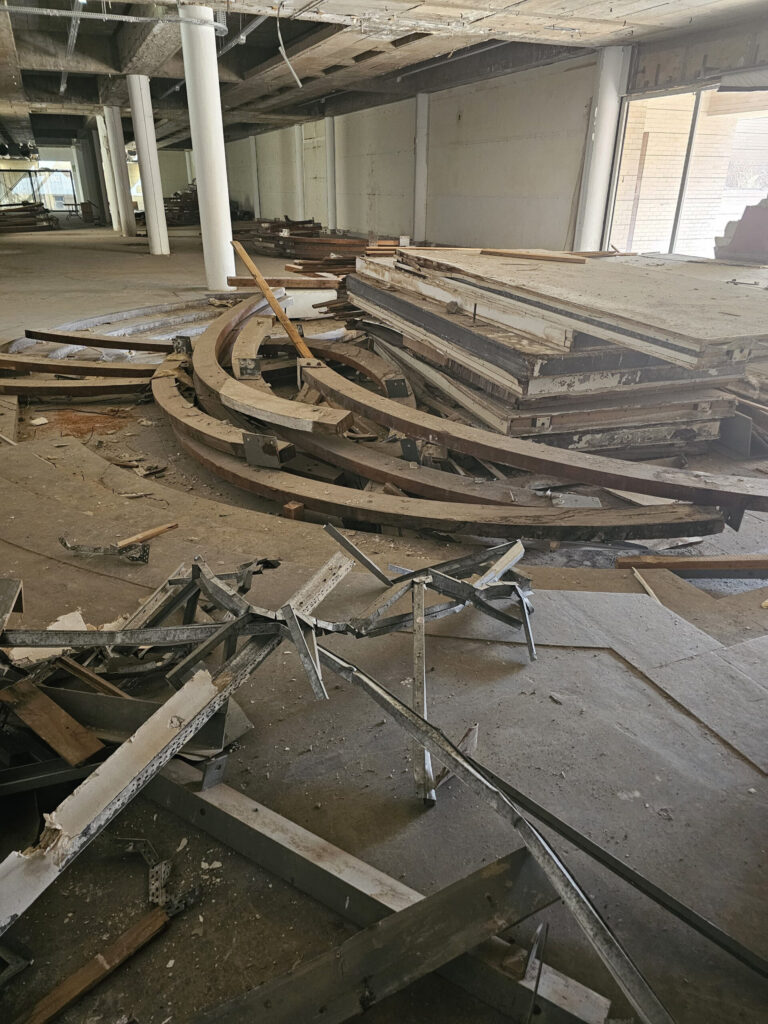
The Collection is not securely housed
Because rooms are empty: only 3 or so on the ground floor are open, just 1% of the 9,000 paintings and artefacts in its collection are on display. And there has been terrible damage to works without any attempts to mitigate the damage or to restore the works.
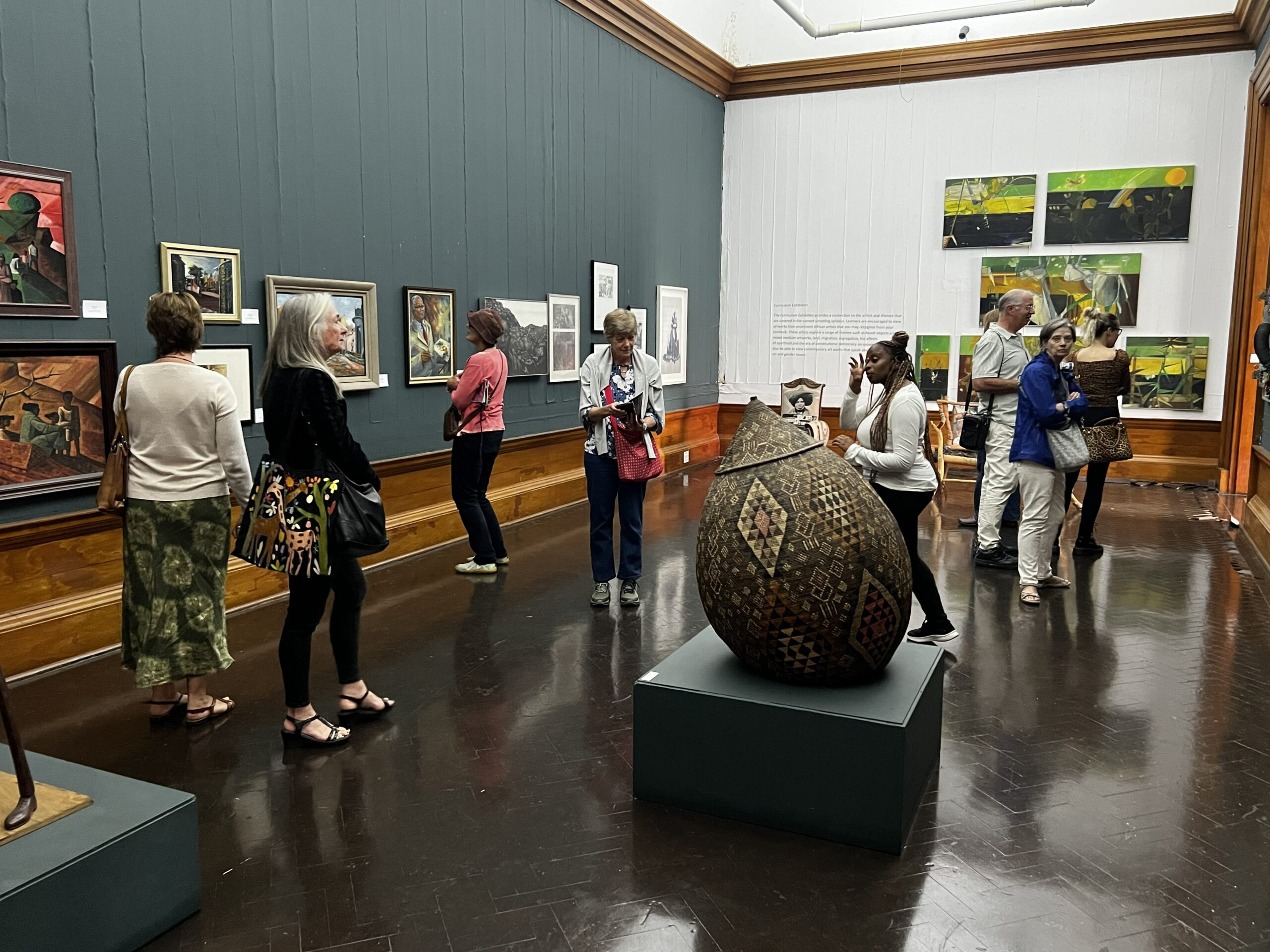
The beautiful Zulu basket in the image above, sits sadly lopsided demonstrating its water damage. When I asked the gallery staff why there was no label signaling that the condition of this artwork was due to water damage and lack of building maintenance, the [incorrect] answer was ‘that it probably came to the Gallery like that’. This lack of transparency (willful or through insufficient knowledge) belies any meaningful care for the collection. For more on this see the discussion below on the notion of authenticity in the Homecoming introductory wall text.
Have works disappeared from the Collection?
Even worse, much about the collection seems to be clouded in secrecy- there is not even a fully inventory of the collection. Giulietta Talevi writes:
“Insiders suspect that one reason for this is that some of the more valuable artworks, like Walter Battiss’s “Mapungubwe”, have been stolen. Whether this would be by city officials, aware that nobody could hold anyone accountable without a proper catalogue, or outsiders exploiting the city’s abysmal management of the collection, is unclear.”
Suggested temporary storage facilities are in an equally bad condition
And as if this is not enough to make city officials sit up and take note, even the attempts to move the collection to save it from further damage and to enable makeshift repairs to take place, have been shrouded in controversy. Locations which are equally unsecured and ill-equipped for storage of valuable artworks have been suggested by City officials. MuseumAfrika is in as parlous a state as JAG, so the suggestion to move the collection there is non-sensical. And locations that have suitable conditions, have been turned down by the City.
Lack of transparency about overseas loans
There have been several loans by JAG to overseas galleries in the last decade with the initial loan of 33 works for an Italian tour in 2015. Giulietta Talevi writes that “Jewels of the Joburg Art Gallery, including art from Picasso and Monet, have spent the past decade out on loan. …. Yet the City of Joburg has refused to say what the terms of these loans are, nor whether there is a monetary benefit accruing to the gallery or, indeed, to any city official.”
And so to HomeComing: the opening event, silencing of the voices who insist “this collection matters”
So this is the background to Homecoming showing at the Standard Bank Gallery until end October. You have PLENTY of time to see it … and see it you must. To see, at last, some of these world class works which form a small part of the JAG collection, is a real treat. Laurice Taitz of Johannesburg in Your Pocket was present at the opening of HomeComing. She points to the glaring lack of any reference in the official speeches to the real heroes who have fought for the preservation of this precious cultural resource ie the Friends of JAG, the JHF, curators, historians and cultural workers. Laurice also refers briefly to other serious lacunae in the exhibition itself, and it is to these I’d like to turn.
And now to Homecoming: Wonderful works of art in a great gallery, but … a lost opportunity
So why do I feel so strongly about writing about Homecoming and all its shortcomings? There are several reasons.
- The laziest and most pragmatic is that for me, it’s a bite sized chunk of writing. But it’s more than that.
- The Standard Bank is currently Africa’s largest bank with an important corporate profile. The Bank has been an extremely influential and generous supporter of the Arts. The Standard Bank Gallery is one of Johannesburg’s flagship galleries. Homecoming would have been a perfect opportunity to signal, yet again to the City – officials and citizens alike, the dire state of JAG.
- It would have been an ideal occasion to acknowledge and honour those who have fought and continue to fight so tirelessly to save the largest art collection in South Africa and the building where it is located.
- There is complete silence around the damage to the collection, the building and the reputation of JAG in the last few decades. (There are damaged works on this exhibition).
- Instead, there is a somewhat skewed attempt at a rewriting of histories. The rewriting is skewed because the histories generally have little or no connection to the adjacent works on display.
- And as an art historian in my previous life, I find the various inaccuracies and the lack of art historical context upsetting and worrying.
- The introductory wall text gives no reference to the authors. Although the curators are named in the accompanying exhibition booklet as Dr Same Mdluli Standard Bank Gallery Manager and Mr Khwezi Gule, Chief curator of JAG, in the exhibition itself there is no reference to the curatorial voices.
I guess the exhibition could have done SO MUCH MORE for the collection, for the Bank and for the City.
While I stand by my words as being ‘true” (in the sense of “accurate”) and “useful”, I think that by surfacing the misleading silences, distortions and the lack of transparency, I am doing “good”. This was a lost opportunity.
The only transparent aspect of this exhibition is the one aspect which shouldn’t be transparent: the labelling of the artworks. Against the painted walls the labels are not easily legible and require uncomfortably close peering.
Problematic issues with the curatorial strategies

Who are the curatorial voices?
Any exhibition involves making choices, making meanings, conveying a particular position to the audience. The curators of Homecoming acknowledge they are making new narratives: “Although for us as the curators, the exhibition represents a culture that is inherited, it nonetheless provides an opportunity for co-creating and storytelling with the audience that will experience it”. This is why acknowledging the curatorial voice is so important and is in fact, standard practice.
Which works were added to the travelling exhibition for its “Homecoming”?
The curators have implied a critique of the contested legacies of colonial collections (which is good and right) but they indicate that: The way to address this was to include other (South African) artists from the JAG collection that speak from a subaltern perspective.
But they also note that “the Johannesburg Art Collection has a long history that documents both the art of collecting and that of redress “.
So were there any of these works “that document redress” on the travelling show? Or were all the works that speak of redress and a subaltern perspective, additional works chosen for Homecoming? If so, which were they, and on what basis were these particular works chosen?
What do the curators mean by “authenticity”?
One of the central underpinnings of Postmodernism, with its emphasis on relativism, is the critique of the notion of “authenticity”. Yet this notion is set up as a possibility not once, but twice in the introductory text: The exhibition seeks to affirm authenticity as a necessary act of resistance and transformation” AND “…caring for these collections… requires … doing so in the most authentic way“.
The irony of the curators’ call to “care for a collection” in an “authentic” way
- I couldn’t help but think of the Brenthurst Collection of traditional Southern African art which formed part of the major Art and Ambiguity exhibition at JAG in 1991. Lent to JAG in the mid 1980s, this marvelous collection was removed in 2023 because of concerns about the condition of the Gallery. It is now housed in the Brenthurst Library.
- And where is the “authenticity” in displaying a superb but damaged and unlabeled Zulu basket (as shown in photo above) with the suggestion that the work was bought by JAG in this condition, rather than that it was damaged because of lack of institutional care?
- And then there is Walter Battiss’s “Mapungubwe“. Is it back in the Gallery?
- And the lack of any complete catalogue or inventory.
These are but a few examples.
Integrity of works is not respected
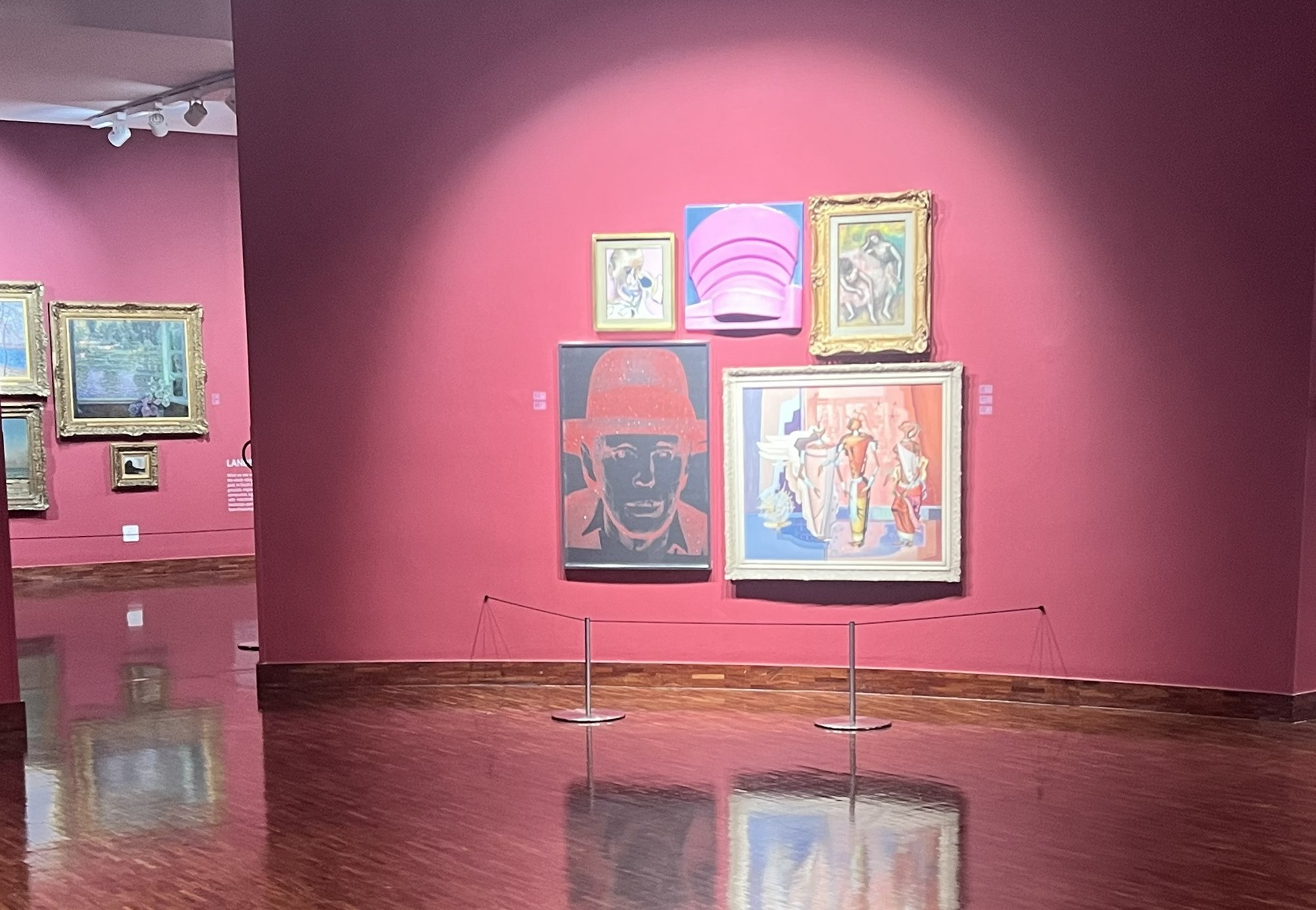
A triptych by its very nature is a contained artwork. So even if the 3 pieces are framed separately, they are de facto meant to hang together. Why are the 3 images which form the Andy Warhol triptych of Joseph Beuys, hung separately?
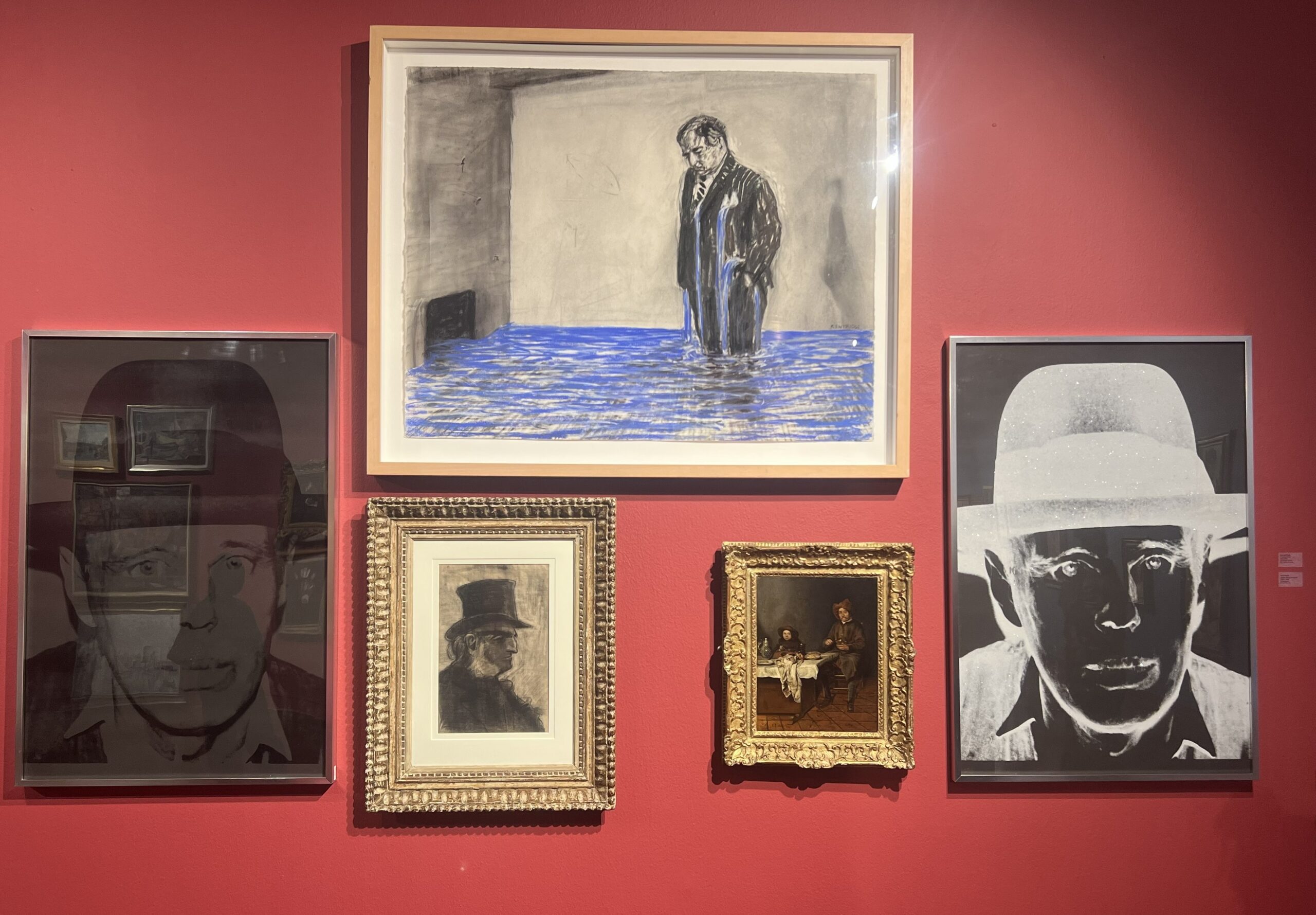
And what is Boursse Esias’ A Simple Meal doing in this group of so-called portraits. A Simple Meal is more a 17th Century Dutch moralizing tale than a portrait. And why is the work dated 1631-72 when these are Esias’ birth and death dates?
Images accompanied by confused texts
The Johannesburg Art Gallery was initiated in 1909 by Lady Florence Phillips and her husband Sir Lionel. Florence Phillips secured a small collection and Lionel Phillips raised funds from his Randlord friends to buy additional top-quality works. A few years later Lady Phillips secured funding from the city for a purpose-built museum which opened in 1915. Pray then, can the curators explain why the portrait of Lady Phillips hangs in the portrait section at one side of the gallery while her husband’s portrait hangs next to the large wall text titled Death?

And as for the suggestion that “one hardly ever associates the subject of death with art collections” and that it is with “the advent of modern history … [that]… museums is [sic] filled with violence and death”. This belies every Last Judgement; every gruesome torture and beheading of saints and infidels; every massacre, gruelling battle scene and drifting raft; every man nailed to a cross; every elimination of a possible usurper by a Roman deity (think Saturn devouring his own son), or punishment for a competitor by a vengeful Greek god.
Is this a willful erasure of many centuries of western art in the service of a crass inaccurate populist wannabee-post-colonial agenda? Or is it merely sheer ignorance of western art museum holdings and the canon of western art? Either are unforgivable under any circumstances but particularly in an exhibition of this magnitude and importance.
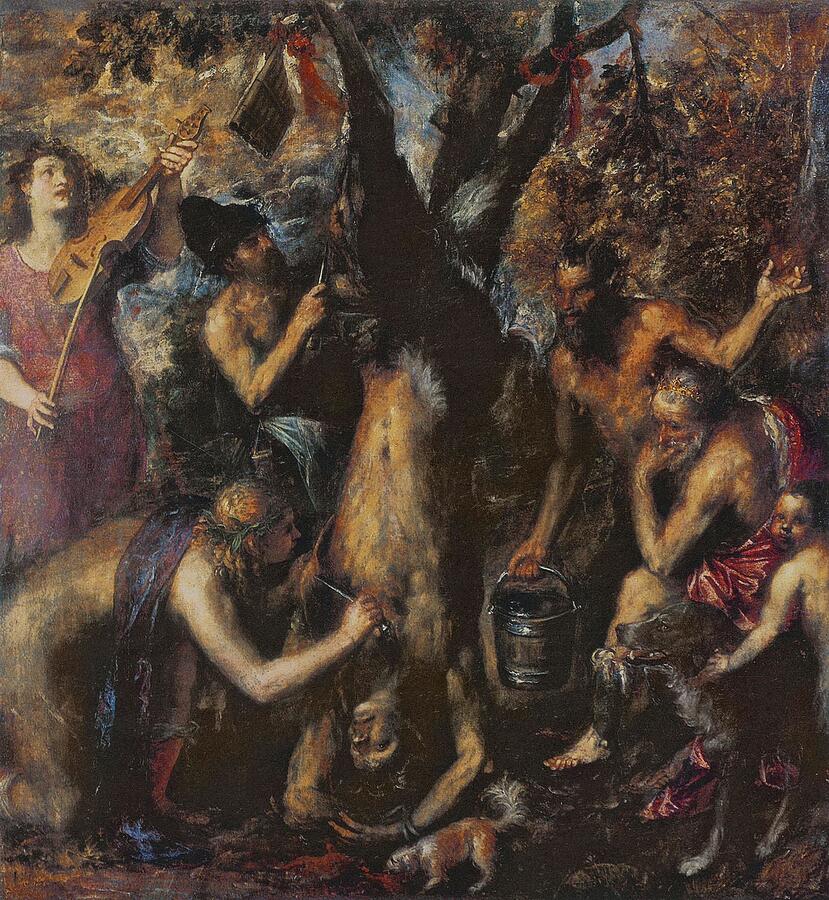
Have painted brushmarks ever conveyed such a violent, poignant and gut-wrenching image in western art history, as Titian’s The Flaying of Marsyas painted between ca 1570 and 1575?
Marsyas was a naughty satyr who played the flute (Titian has him having played the pan pipes), and who got ideas above his station by challenging the supreme god Apollo whose instrument was the lyre (think passion and emotion versus reason and order). Apollo won the competition and had Marsyas skinned alive. Marsyas is portrayed upside down strung up by his hooved feet, his furred skin being cut off his body while he is still alive, with a bucket being offered to collect the blood dripping on the ground. Could one have a more brutal and savage subject than this?
Different rooms – thematic breaks
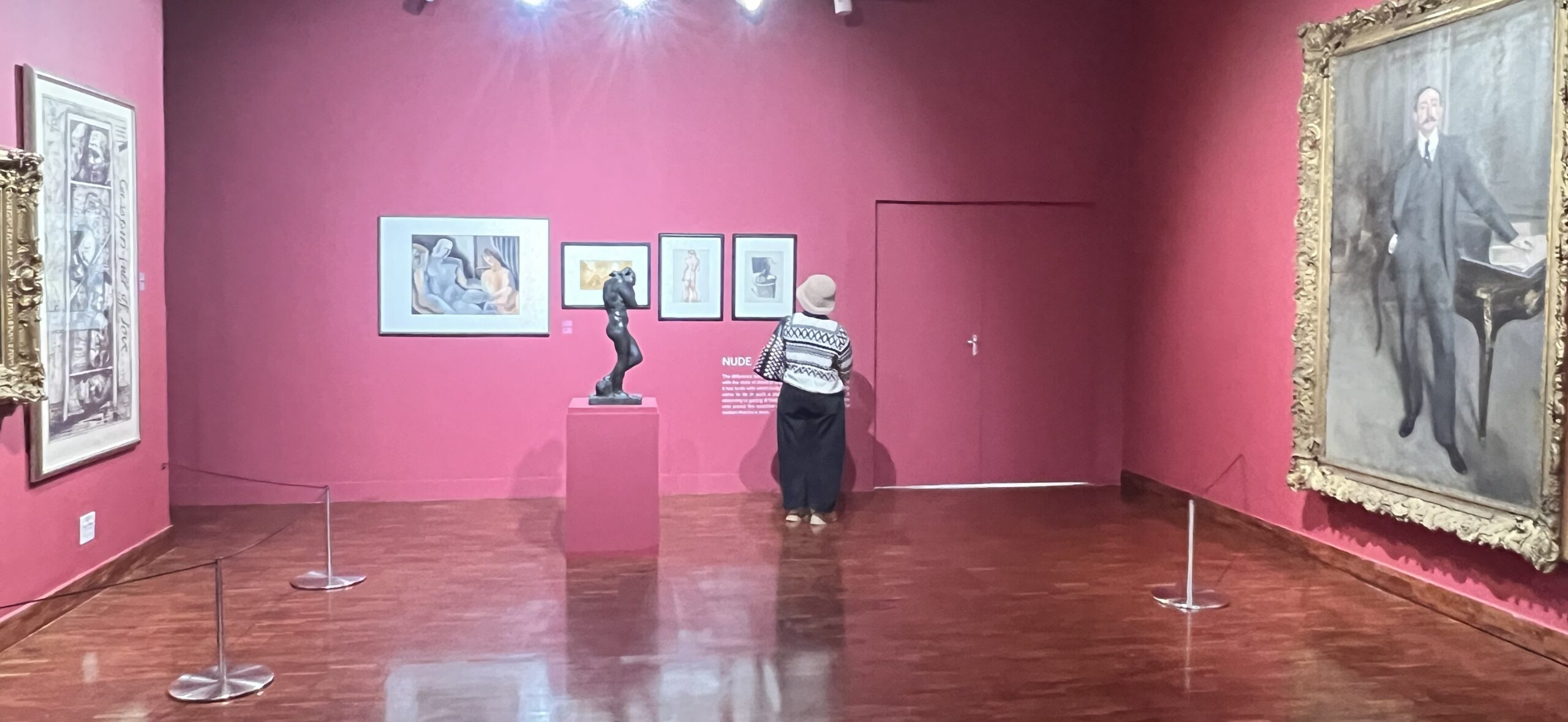
On the back wall of the photographed space above, to the left of the portrait of Lionel Pillips’ are 4 images of nudes next to a text about the Nude. In a completely separate room on the far side of the gallery, with NO physical linking connection to the space represented in the photo above, are the remaining images of nudes. This makes no curatorial sense.
Illogical and unexplained juxtaposition of images
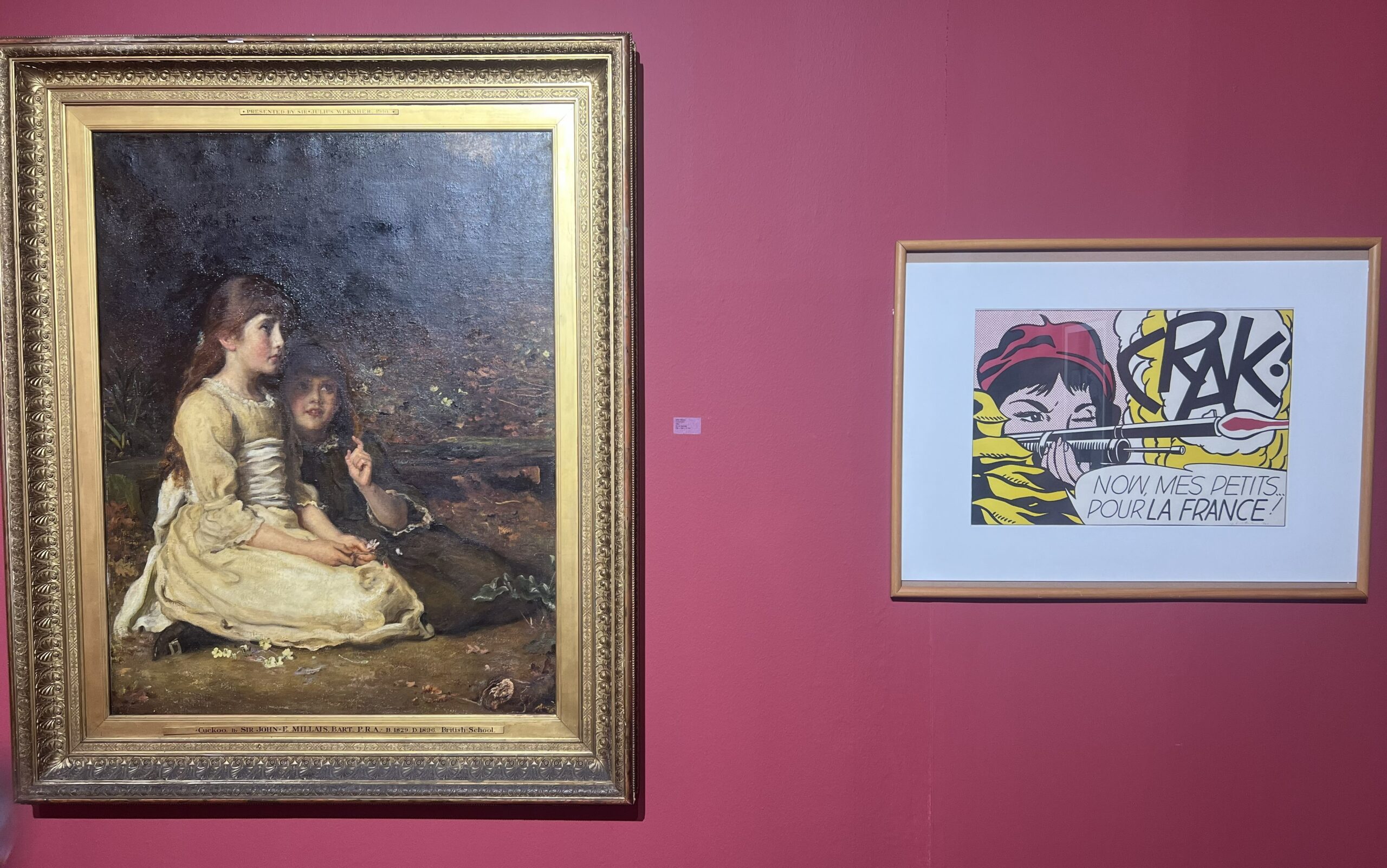
Above we see on the left Millais’ Cuckoo, an oil of 1880 which possibly suggests his early Pre-Raphaelite interest in the natural environment as the two children are shown listening to the unseen cuckoo’s call – perhaps a herald of spring. And on the right is Pop artist Roy Lichtenstein’s Crak! a 1963 lithograph in his comic style which refers, amongst other things, to his interest in combat and military art. Please enlighten. What are we, as the viewers, meant to make of this juxtaposition? What have I missed?
Rewriting of history gone COMPLETELY awry
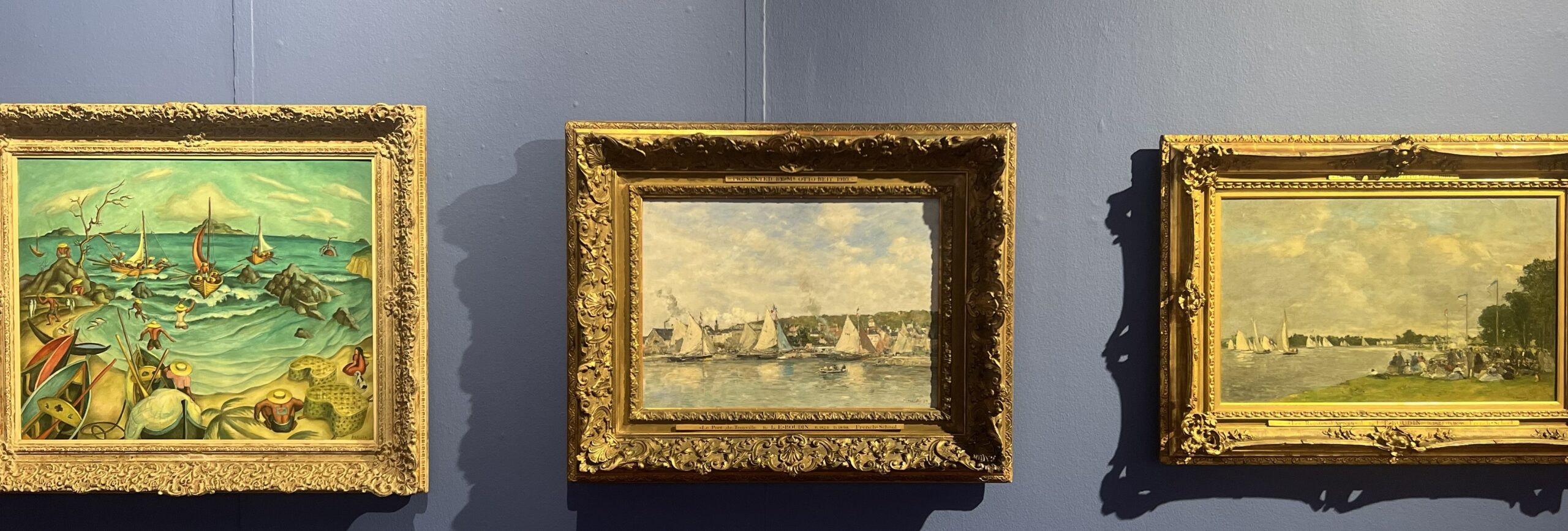
Preller’s work on the left depicts a Seychelloise fishing scene. Straw hats protect the fishermen from the warm tropical sun. Some return in their sailboats with fish aplenty, while others relax on the shore, their tanned muscular bodies soaking up the sea air. A woman watches with her dog by her side. In the late 19th century, Argenteuil, (right) a small village on the Seine, was a 15-minute train ride from Gare Saint-Lazare in Paris, making it an ideal weekend destination. With contemporary life, leisure boating activity, and the constant reflective movement of water, it provided ideal subject matter for the Impressionist painters. Boudin also painted on the Normandy coast in north-west France, (centre) at Trouville where the harbour scenes provided ample opportunity to capture the changing qualities of light and atmosphere which was so central for the Impressionists.
AND YET …. A SPECIAL theme is invented for these 3 images: SAILING.
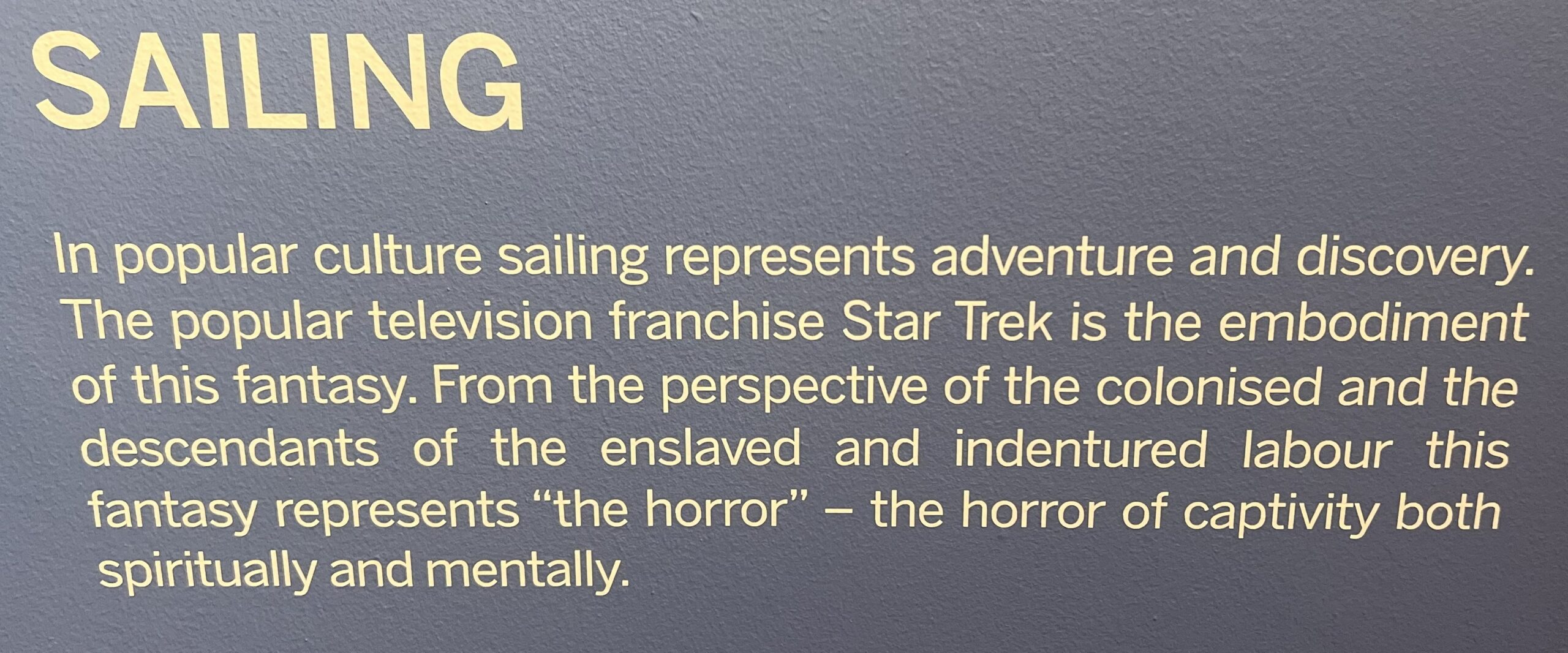
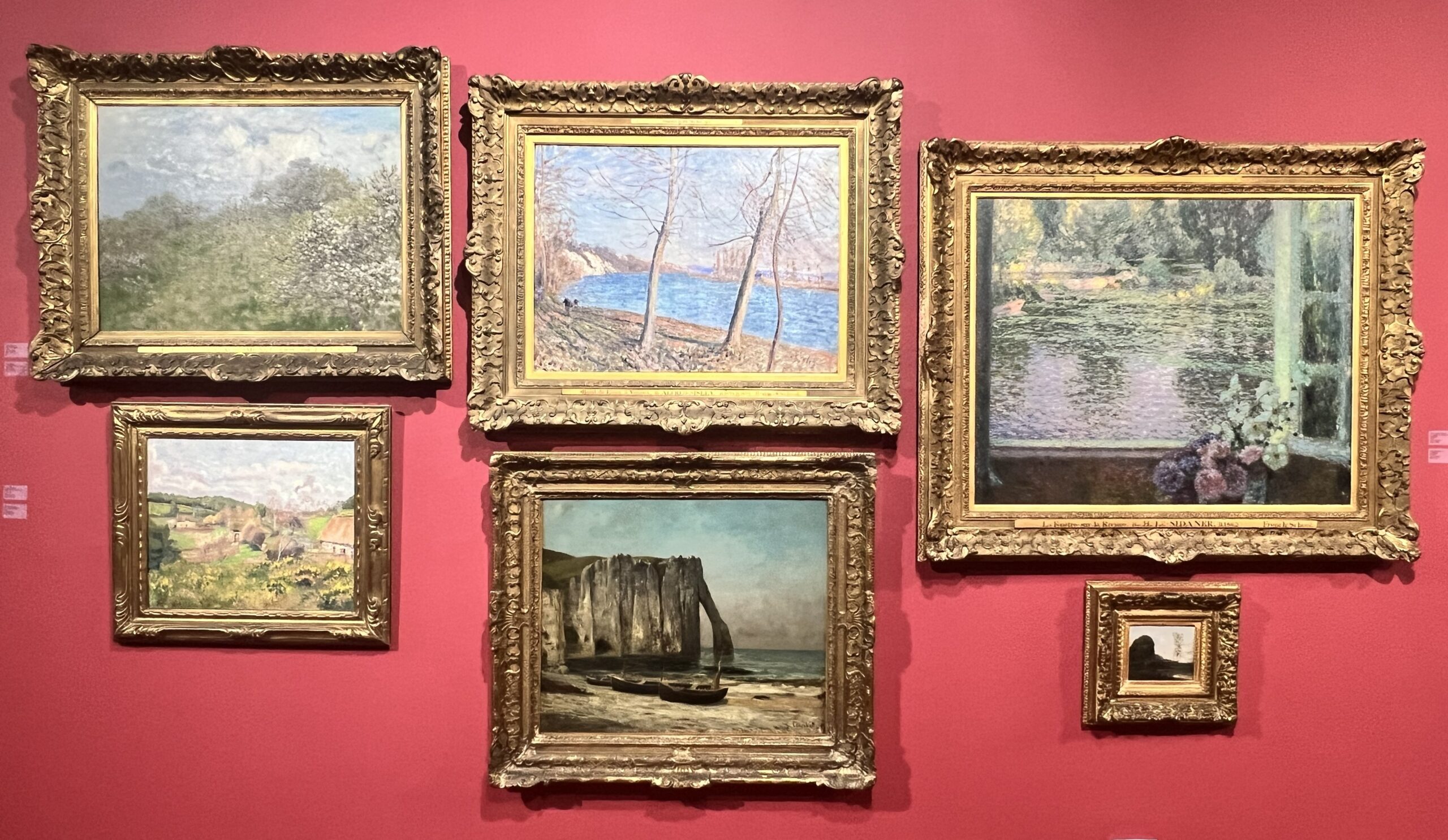
There is a published booklet for Homecoming. And in this booklet the text on Sailing is linked to Maud Eyston Sumner’s ‘Eyston [sic] Red Venice”, 1952, a harbour scene with gondolas and boats. Adventure? Discovery? The horror of captivity? Methinks not.
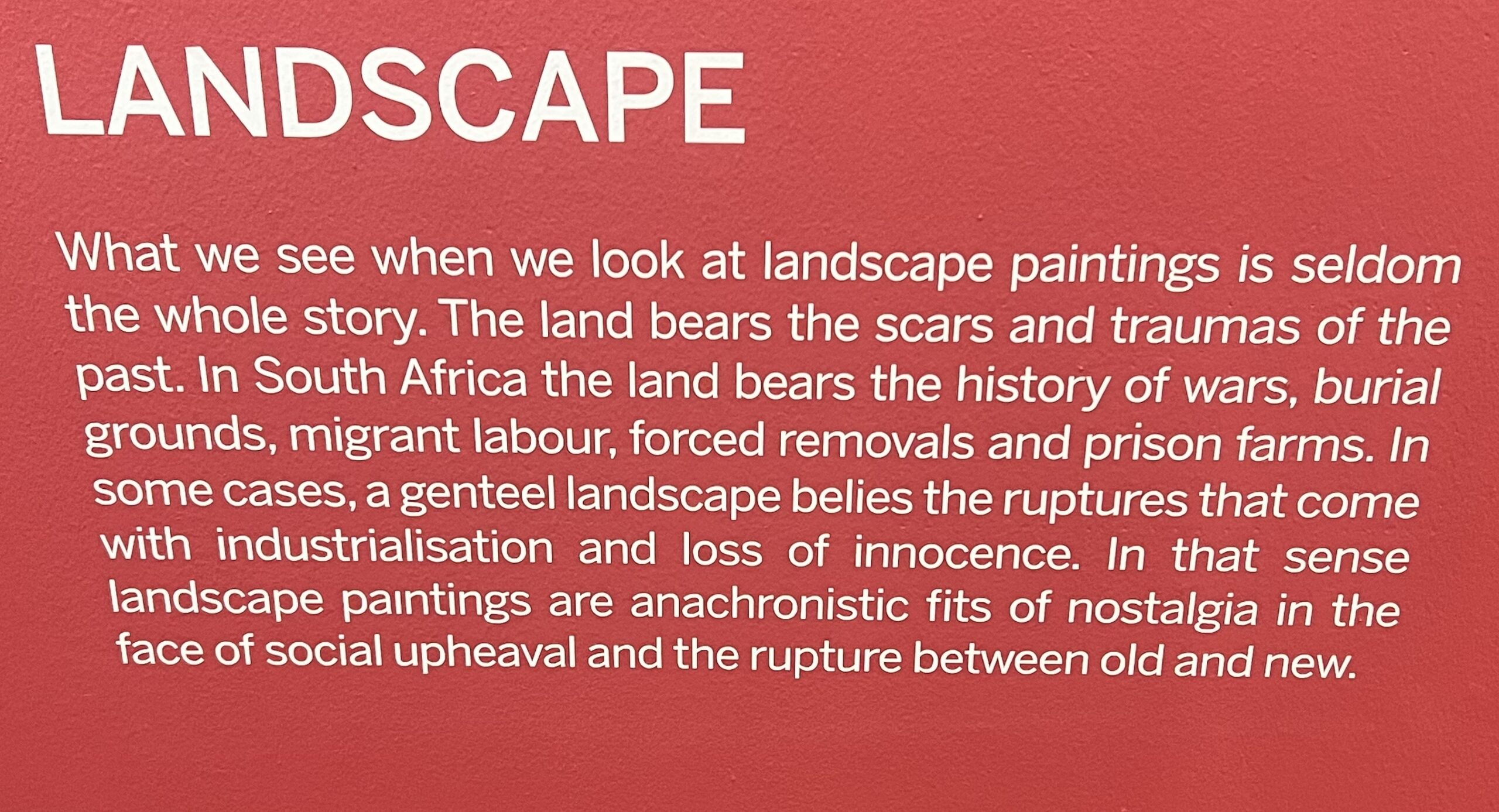
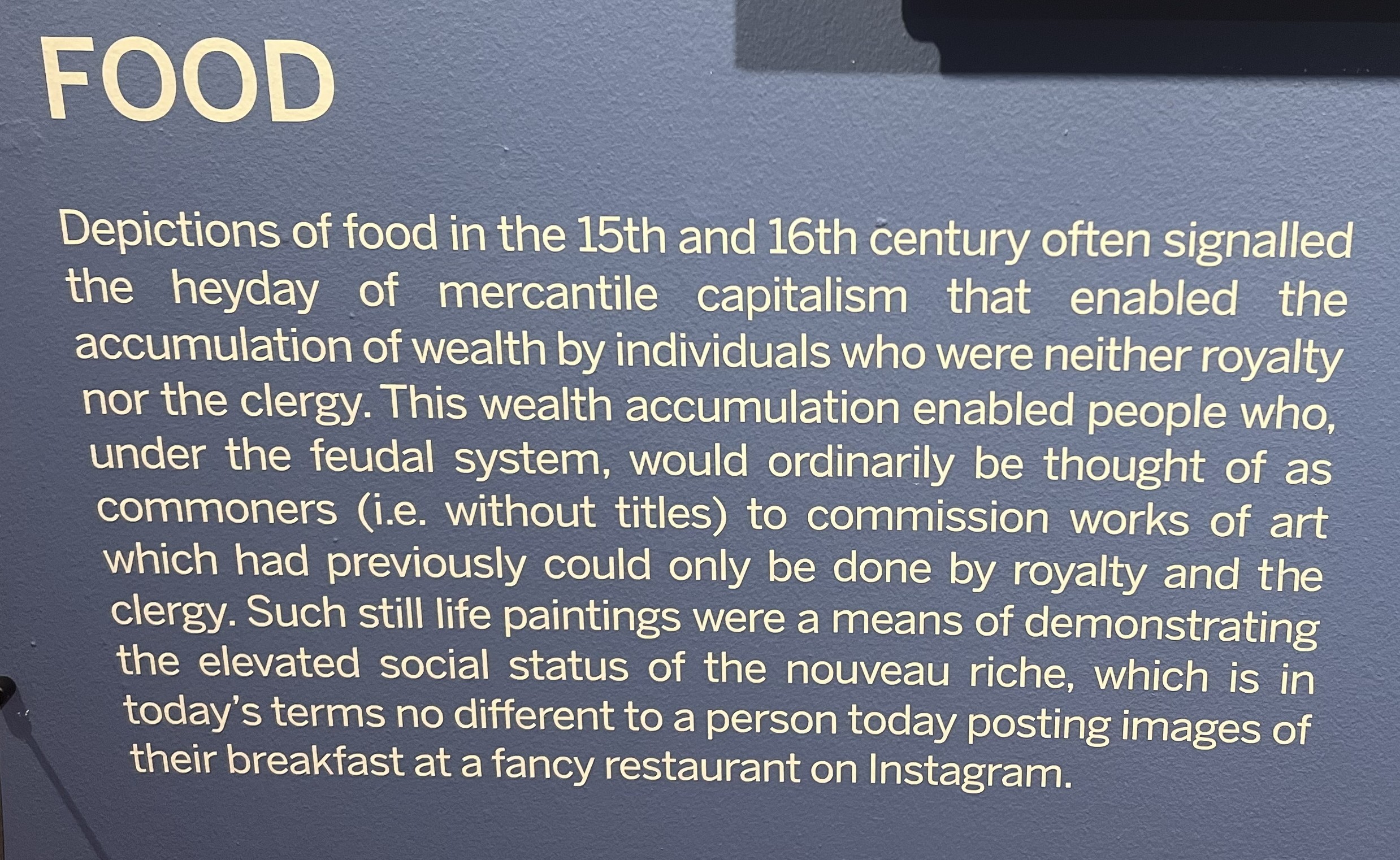
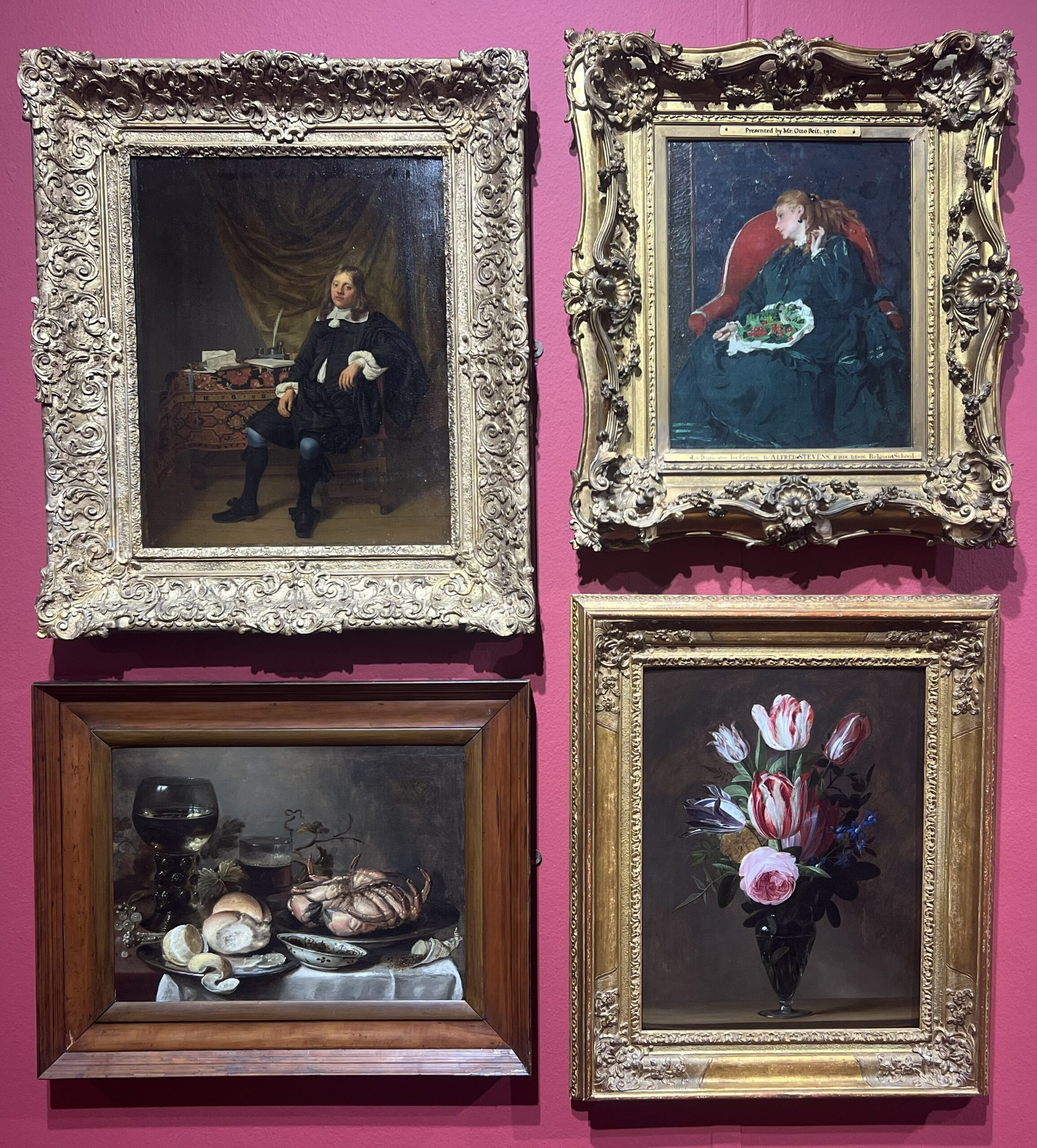
To understand still life paintings as a means of demonstrating the social status of the nouveau riche (a term which probably only emerged after the French Revolution in the late 18th century), is certainly valid. But to see these paintings as “no different to a person today posting images of their breakfast at a fancy restaurant on Instagram” is a slick but inaccurate populist line.
In contrast to influencers and Instagrammers, Dutch still life paintings often made reference to the transience of earthly life and made moral comment on an excess of material wealth. See for example Boursse Esias’ A Simple Meal in the Portrait section of Homecoming.
And very importantly the handmade image was paramount. To compare these oil paintings to ubiquitous Instagram images, is to belie the supreme value placed on artistic skill, which was not merely a means to an end, but was itself a source of admiration, pleasure and prestige. Patrons prized the artist’s ability to render textures, light and detail with astonishing precision. Virtuosity was valued independently of narrative, symbolism, or moral content.
This is very far removed from the instant snapshot of a meal posted on Instagram or Facebook to join the millions of other digital images in the Cloud.
There are other disjunctions between wall text and images, but I think the point has been clearly made. There is no question received histories have been inaccurate, one-sided and pushing a particular narrative. But that does not mean that we have to repeat the same mistake again – this is equally unforgivable. Let us not repeat ‘the sins of our fathers’.
On show until 31st October
Despite this extensive critique of the curating, the works themselves are marvellous. Visit the exhibition and soak in the range of exceptional images.
The exhibition runs until 31st October. And the Gallery is open Monday – Friday: 08h00 – 16h00 and Saturday: 09h00 – 13h00