
Jozi rises to the occasion
After a few weeks away in the very aptly named Cape of Storms, it was with mixed feelings I returned home to this “tatty, scuffed, scrappy city” (as a friend of mine affectionately calls it). But my first week back reminded me why I love Jozi and all it has to offer.
2026 RMB Latitudes at Shepstone Gardens
22nd May saw the opening of this 4th annual event, an Art Fair which is always a complete treat. There is an overload of really top-quality middle-market art in this most fabulous of venues: Shepstone Gardens. For a more extensive discussion see Bronwyn Coppola’s pointers in the Daily Maverick.
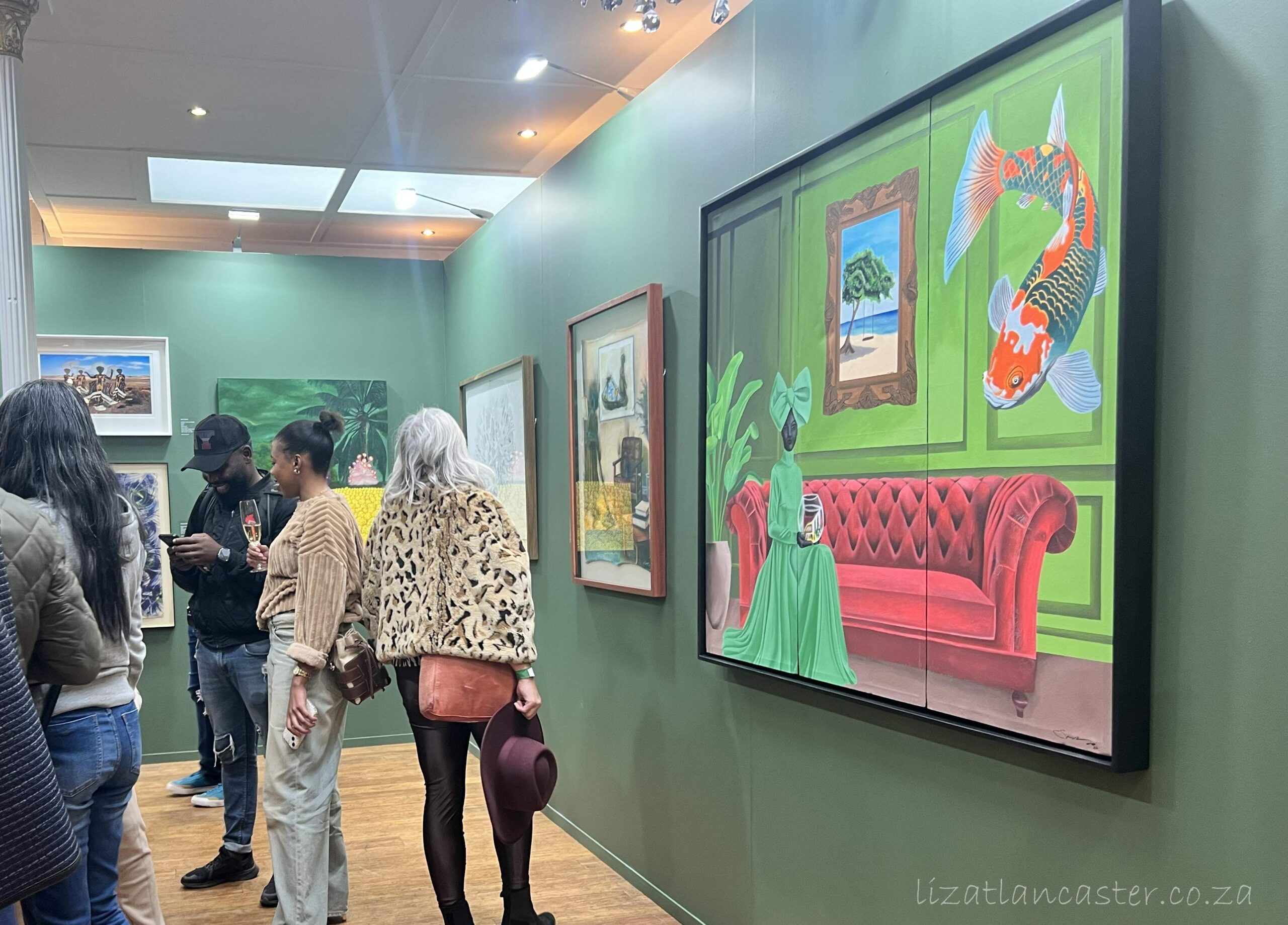
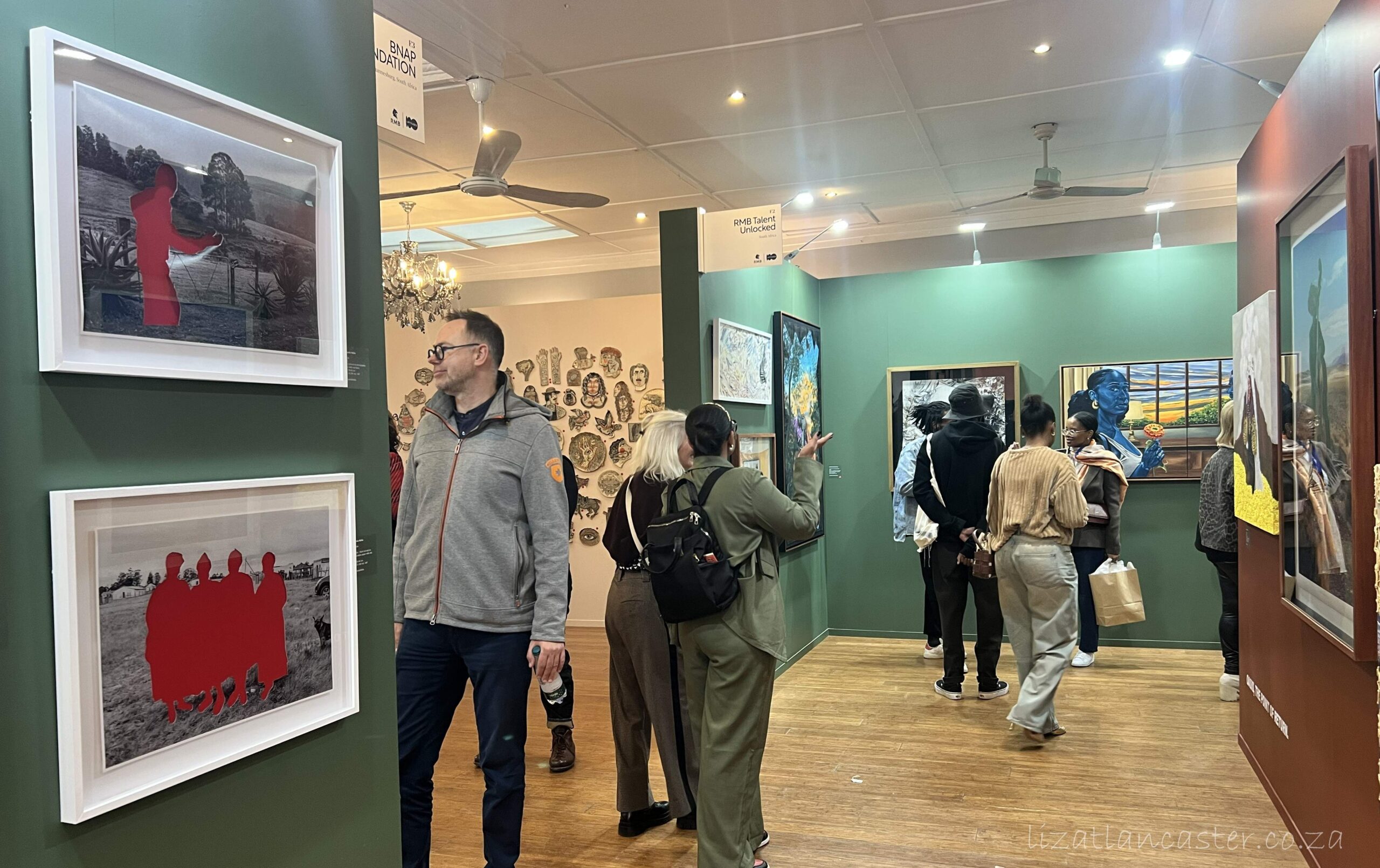
I’ve written before about this wonderland of whimsy with its higgledy-piggledy, crazy eclectic buildings staggered up the hillside, its glass domes, classically referenced facades, oriental arches and reflective pools, sunken gardens and marvelous surprise spaces. When it comes around again next year, make sure to get a Fair Guide -even with it to hand, it is still all quite overwhelming! But there are coffee, food and drinks stations to sustain you. Lots of beautiful people with sparkling outfits, impressive ankle-breakers (particularly given the uneven surfaces) and of course the mandatory wine or champagne glass in hand. It’s a great place to people watch in the restorative down time between focusing on the artworks.

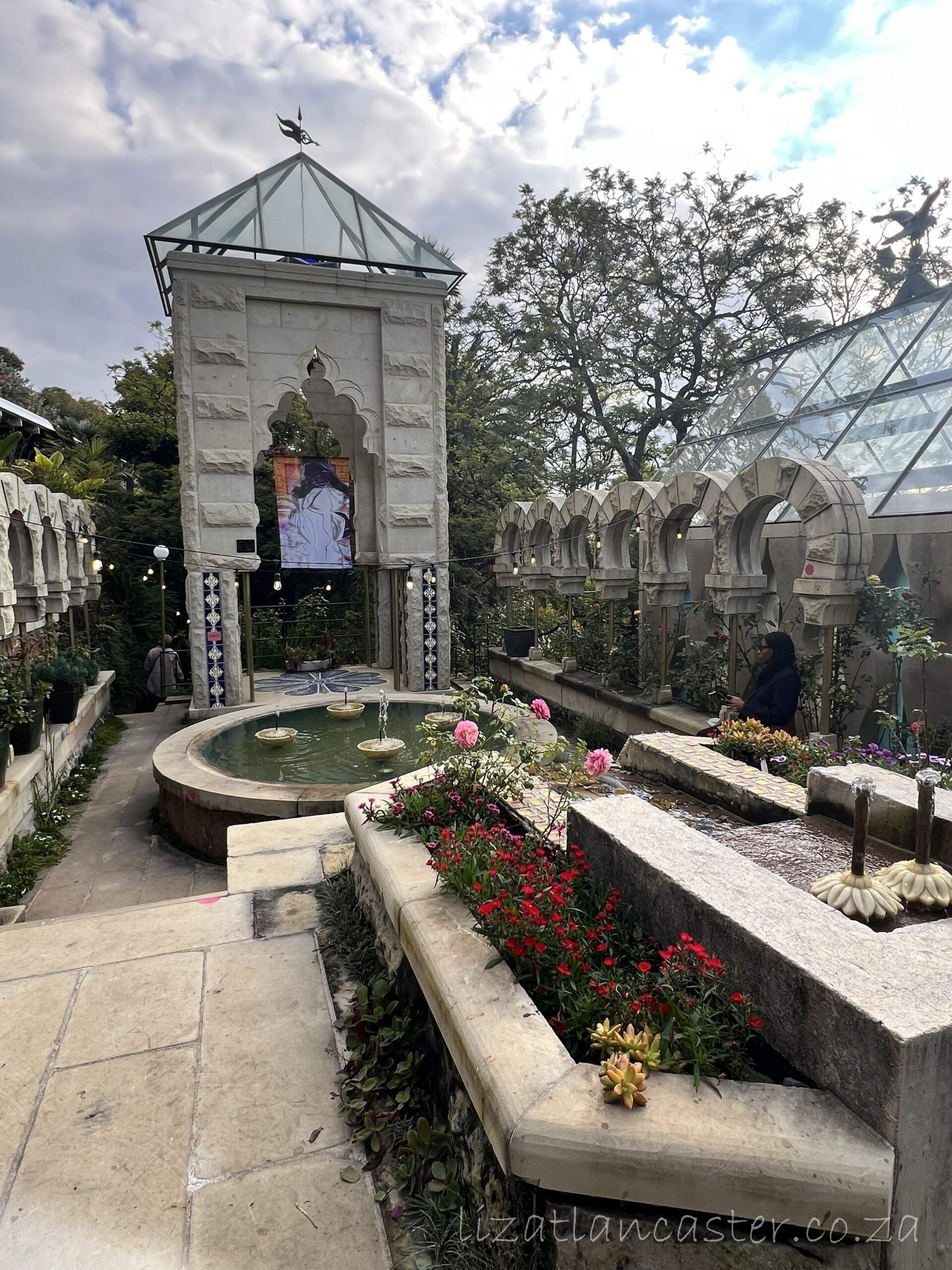
Make sure to diarize it in your 2027 calendar. Spaces are limited so you need to book tickets which sell out fast over the week-end. It is beautifully organized with parking at a gym in Houghton and shuttle vehicles, mostly electric vehicles provided by Toyota, which glide silently as they transition between leafy Houghton across the grittier corridor of Louis Botha to the venue itself.
2026 Kingsmead Book Fair
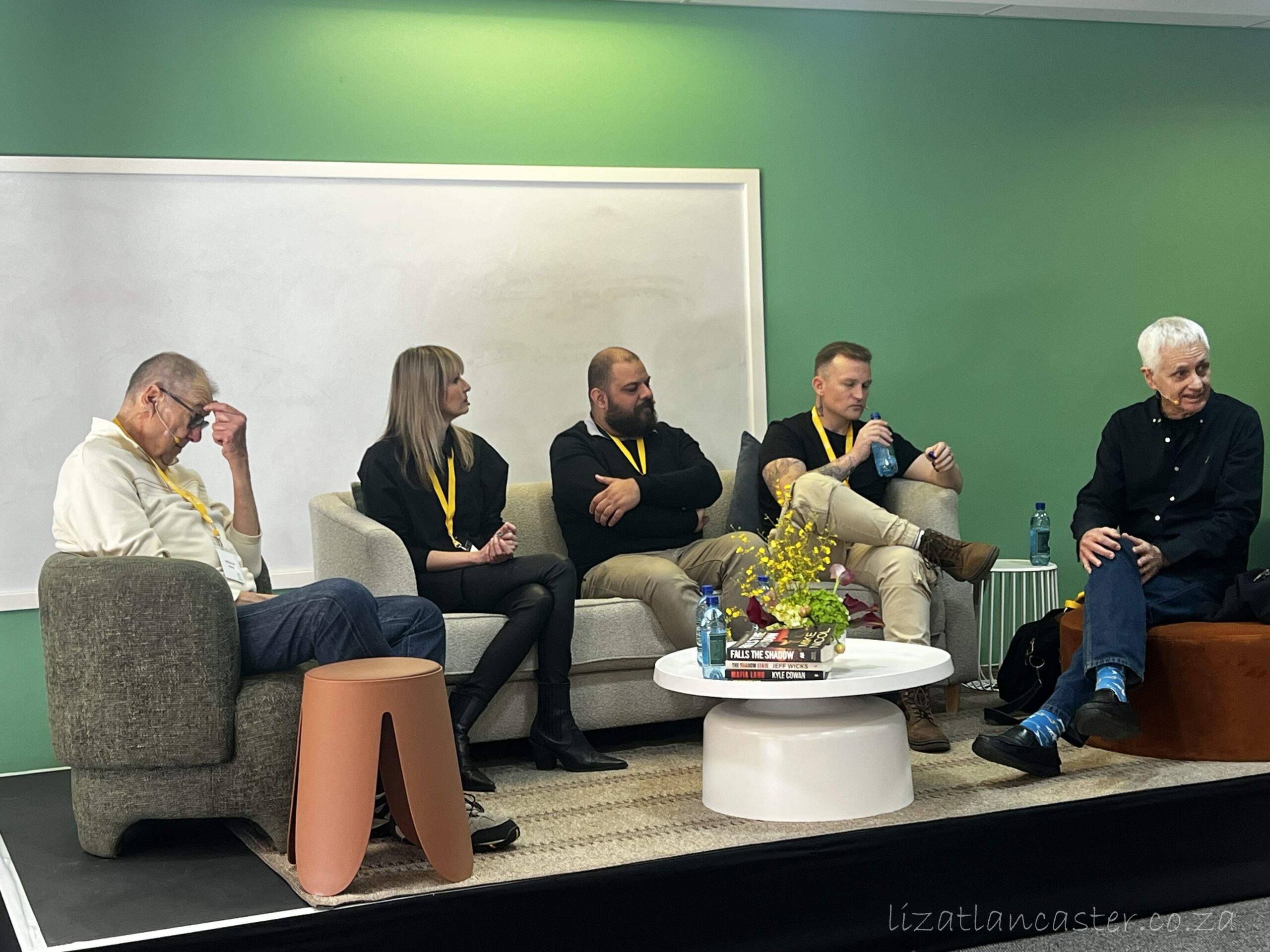
And the weather held for the next Jozi annual event which is etched in my calendar: the Kingsmead Book Fair. With 5 slots of some 9 concurrent discussion panels for adults, it is really difficult to make choices. Authors who have written on connected topics are grouped on a panel with a facilitator. It’s a great way to put faces to names, to get a preview of a particular book, and to get an overview of a theme or topic.
First Panel: Writing about Crime and Corruption
Second Panel: Reshaping of global, continental and domestic markets in the current unstable global landscape
The second on my agenda was, Power Policy and Politics: Is 2026 the year of Geopolitical Recalibration, an interview with Goolam Ballim, Standard Bank Chief Economist. While there was nothing particularly new in the discussion, it was somewhat reassuring to hear yet again how Africa is, for many reasons, quite well-placed going forward in the 21st Century. A few of these reasons are its mineral resources; its demography favouring youth (by 2050 one fifth of the global workforce is predicted to be African); with 60% of the world’s arable land, Africa has a role in food security; the post-pandemic improvement in policies and governance in several African countries. There are obviously caveats however: namely investment being so closely linked to good governance and the rule of law; the effects of climate change; the volatile changeable geopolitical landscape, amongst others.
Panel 3 Informal economies
Making it work: The economics of the urban margins of Joburg covered a topic very close to my heart: GG Alcock (KasiNomics Unleashed), Hannah Dawson (Making A Life: Young Men on Johannesburg’s Urban Margins) and Tanya Zack (The Chaos Precinct: Johannesburg As A Port City) discussed Joburg’s informal economy with Zanele Mji of Golden City podcasting fame.
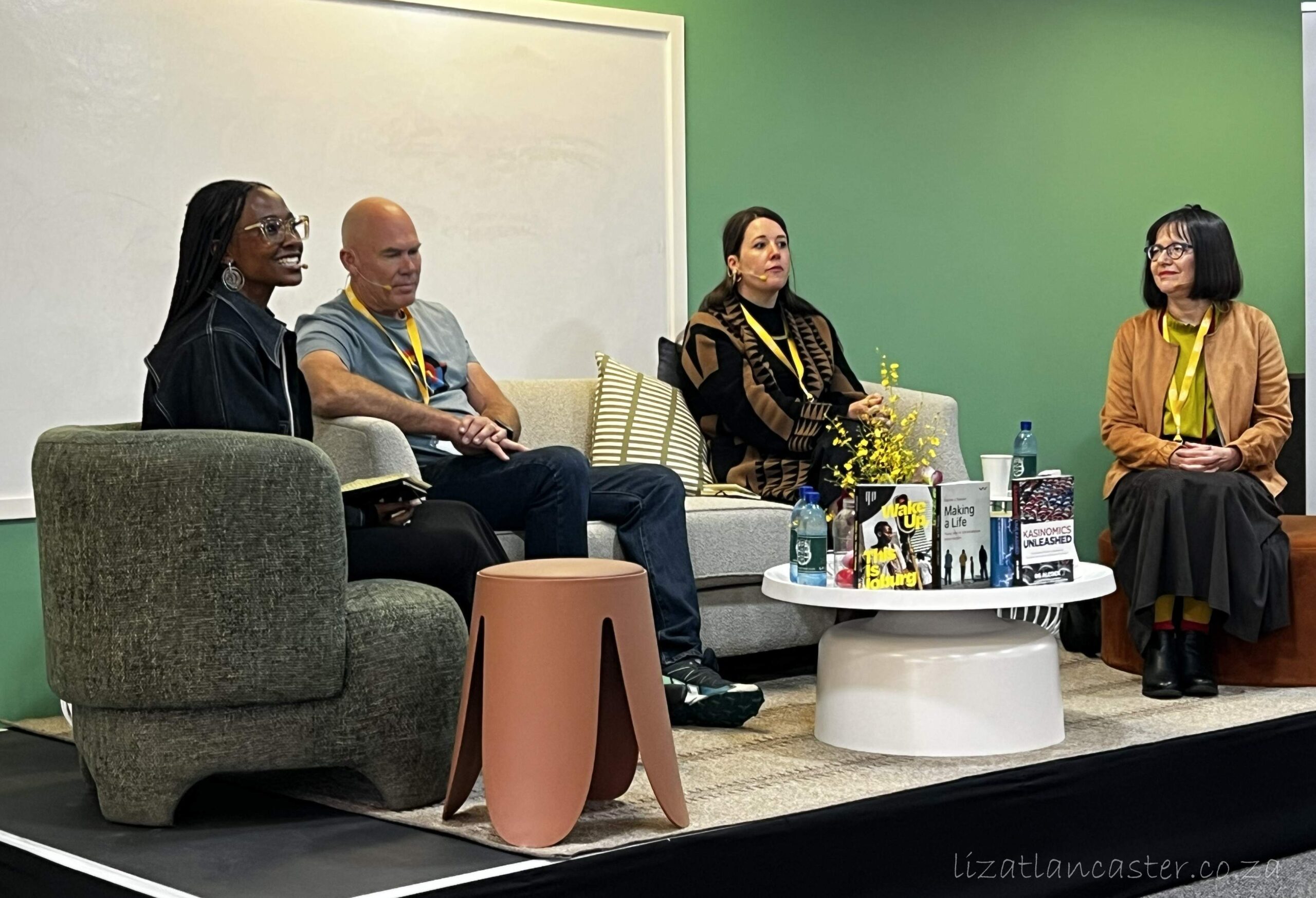
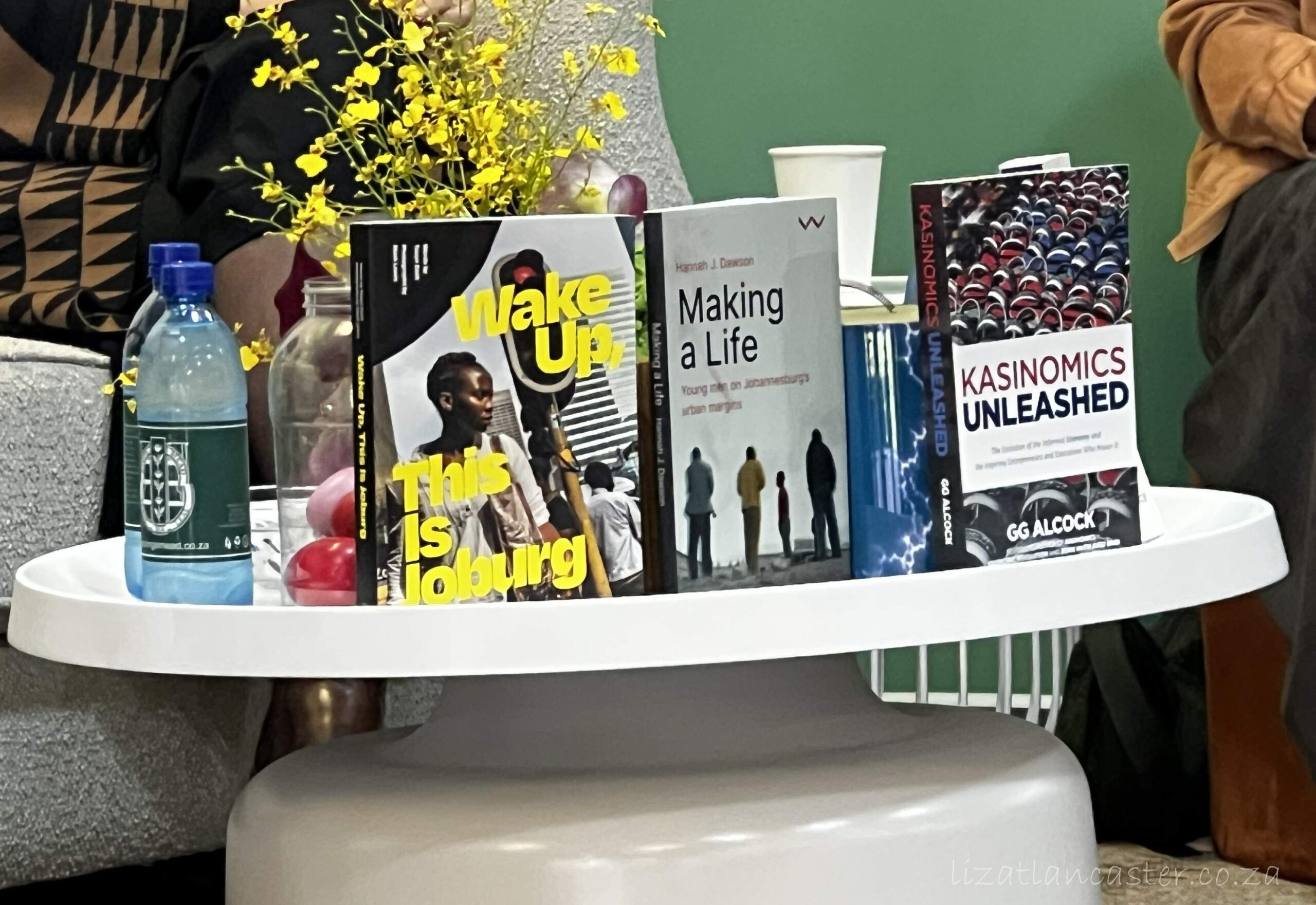
Hannah Dawson is an academic in the Anthropology and Development Studies department at the University of Johannesburg. Her book Making a Life looks at ways in which young men in Zandspruit, an informal settlement on the western urban edge of Johannesburg, navigate the precariousness of unemployment or underemployment.
Chaos Precinct: Johannesburg as a Port City arises from years of research by Tanya Zack, an urban planner by profession. Chaos Precinct (the unofficial name given to it by City officials) refers to “Jeppe” also known as Little Addis or the Ethiopian Quarter, a packed maze-like cluster of tiny booths and street stalls in Johannesburg’s CBD. Zack’s research dovetails beautifully with GG Alcock’s, as she examines how goods and products come in from global factories (often from or via China) and then get bought by cross-border shoppers to be sold across Africa, making Jozi a truly ‘port city’. She documents how the annual revenue generated in Jeppe is about twice that of Sandton City, Africa’s wealthiest shopping mall.
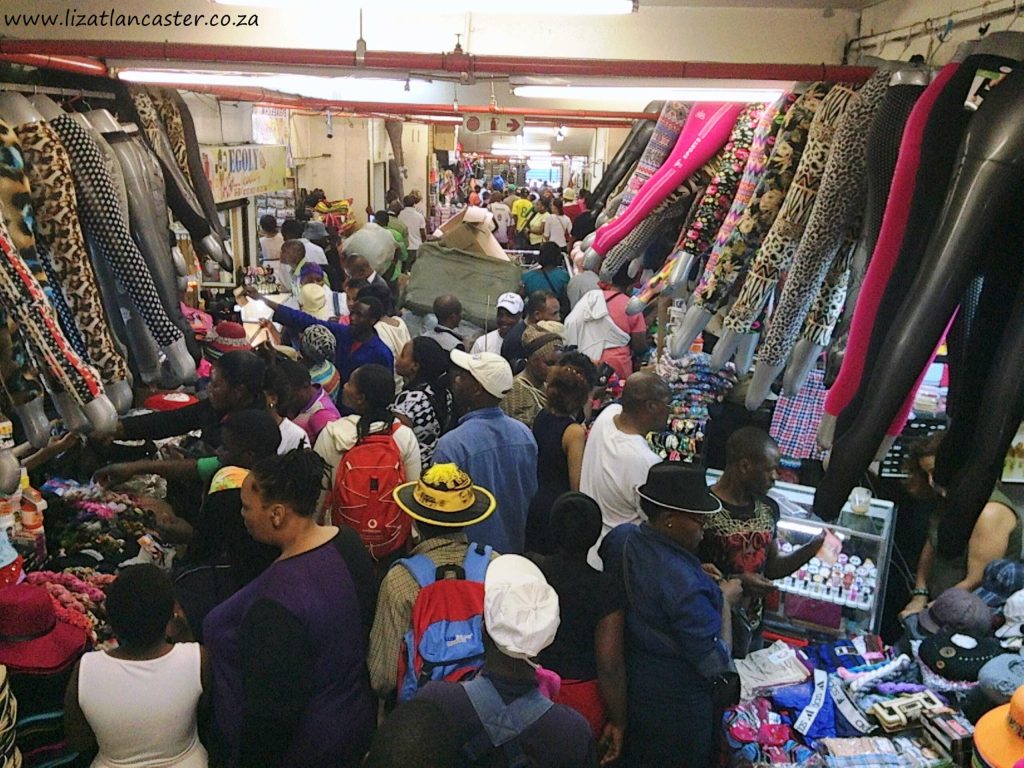
I have written before about GG Alcock’s research in his first book and his assertions as to the astounding contribution the informal sector makes to the mainstream economy. Just a snippet of his estimation of national annual turnover figures in the informal sector, a sector which GG prefers to call “the other world”:
- Spaza and spazarettes R190B
- Taxi industry R50B
- Shebeens and liquor outlets R110B
- Kasi kos (Location food) R90B
- Traditional medicine R18B
- Stokvel and AmaSociety (Funeral societies) R50B
- Hair styling and products R10B
- Backyard rentals R30 B
- Pavement hawkers and table-top traders. There is no estimated figure for the last “industry”, but he notes (p28): In a 2010 study of Durban’s Warwick Street market, NGO Asiye ETafuleni reported that just the 120 to 140 boiled mealie sellers in that market sold 26 to 28 tons of boiled mealies a day in Durban’s inner city streets, making a gross turnover of over R1 million a week. [I looked at these figures and thought “It can’t be true”. I did the Math: 28 tons = 25396 Kgs divided by 140 = 181.4 Kgs per seller. So I guess it is possible? Astounding!]
GG goes on to say: (p36)
By my estimate, considering the figures I have access to, the informal economy is a R750 billion sector. That’s according to stats that are available, but what about the unmeasured ones?
How many bakeries, internet cafés, tailors, builders, steel workers, carpenters, cabinet makers, plumbers, renovators, furniture upholstery renovators, furniture traders, tent, chair and mobile toilet renters, caterers, créches, money lenders, car washes, bakkie delivery drivers, waste collectors and recyclers, rural goat breeders, vegetable growers, beer brewers are there?
While GG estimates the informal economy to be worth R1 trillion a year, he refers to the 2024 Finscope MSME survey, which stated that 3,027,298 micro, small and medium enterprises (MSME) in South Africa employed 13,429.013 employees and turned over R5.29 trillion . The informal economy according to this survey turned over 2.3 trillion of the 5.2 trillion across just under 2.2 million informal businesses. ie more than double GG’s estimate.
And the significance of these extraordinary figures is that if the informal economy is larger than thought, then unemployment must be much lower. Gerrie Coetzee CEO of Capitec, the very successful bank focusing in the lowest economic sector, believes Stats SA 2024 figure of a 31.9% unemployment rate, is grossly overestimated and suggests it’s more like 10% or 11%. This figure is highly contested by academics, Stats SA, and economists as was evidenced by a challenge from the audience when it came to question time.
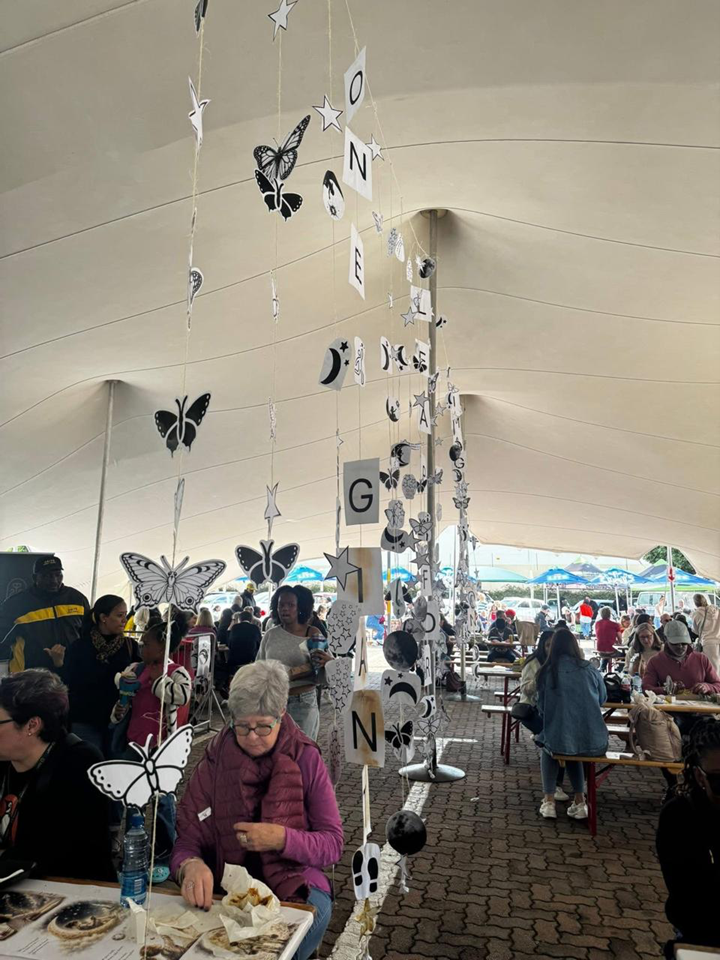
Final Panel: Tara Roos and Helen Zille
This proved to be a fascinating discussion with divergent viewpoints.
Tara Roos is a very young (now 22), very smart, political analyst who took on the also very smart but not so young Helen Zille (now 75). Zille is the former leader of the Democratic Alliance [DA] and then Mayor of CapeTown and now campaigner to become Mayor of Joburg. For me the most interesting takeaways of Roos’ argument were that, although it looks as though the DA has gained ground, this is not so. The DA percentage of votes has increased but this is because in the last election the disillusioned ANC voters stayed away. Roos argued that the disillusionment was with the corruption per se, not with the ANC as a party, and that these stay-away voters did not see a home for themselves in the DA. She also noted that the ANC and its affiliate parties, the ANC “family” including MK and EFF, still earned 60% of the vote in South Africa. She noted that the best the DA has ever done was to garner 1.4M votes in 2014 when Helen Zille was leading the party and that since then, they have lost 600,000 votes. She noted that the DA lost 50,000 votes in the 2024 election in Gauteng.
The main takeaway for me from Helen Zille, who is so incredibly sharp and incisive, was that in these upcoming local elections the DA is pursuing the good governance vote. She argues that until now, the ANC has won what she calls the “historical, loyalty and identity” vote. And that given Johannesburg’s appalling history of management and governance, this will change in the November local elections. We can only hope.
And HOT OFF THE PRESS: The DA has today just pulled off a historic first by winning its first Gauteng township ward, edging the ANC in Evaton West, Emfuleni. Both DA and the ANC gained 32% of the vote (a very poor voter turnout at 36%) with the DA moving up from 16% of the vote in the 2024 election and the ANC dropping from 53%. This is a massive swing. BUT the DA won by 8 votes only … whoever said “our vote does not count”? This should be a clarion call for the importance of getting people to register and showing that each vote is paramount.
If I was president of this country I would make voting mandatory.
For more on the Kingsmead Book Fair
Screening of the National Theatre Live 2014 production of A Streetcar Named Desire
And as if visual arts and books were not enough to fill my cultural coffer, I went off to claim my preview ticket of the live screening of the 2014 National Theatre Production of Tennessee Williams’ A Streetcar Named Desire. I’m afraid to say I knew very little about the play.
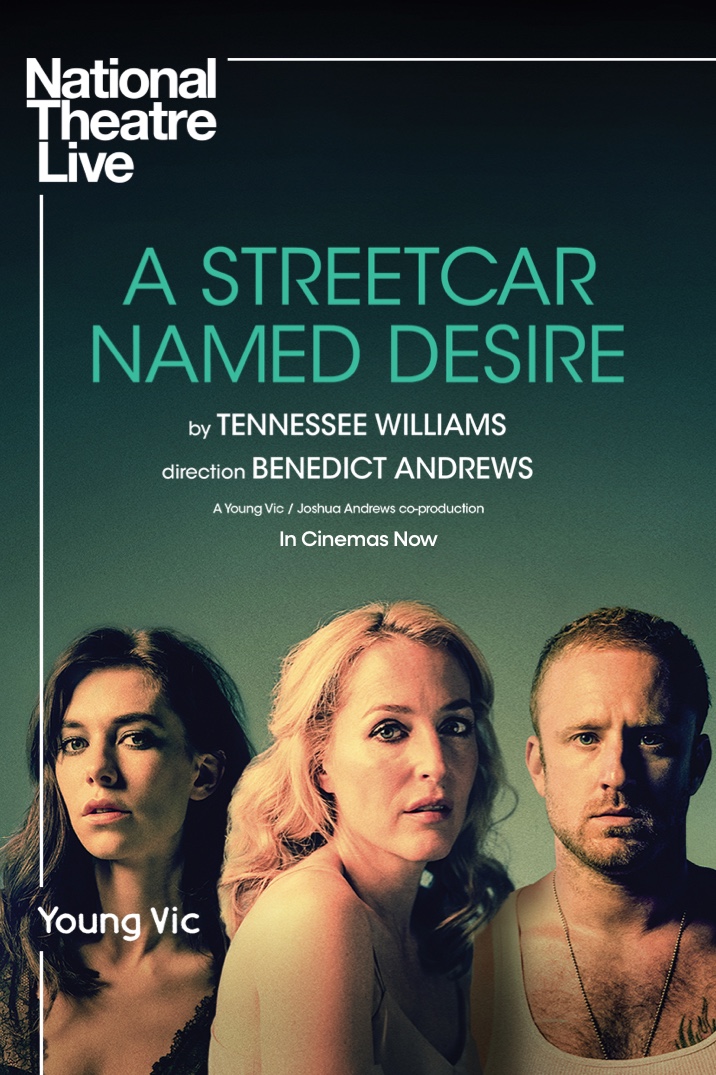
And I was blown away. This is theatrical drama at its finest – raw, gritty, compelling, thought-provoking. The wall-less rectangular stage set includes bedroom, living space, bathroom and outside porch, with an iron staircase to the neighbours’ upstairs home. The set is fully surrounded on all sides by the audience. But this set is not static, it often revolves suggesting physical instability, a changing impermanence where moods, alliances and power balances, shift and morph with the flick of a metaphorical switch. The usual fixed relationship between spectator and stage space is subverted, and as the stage moves actors are often temporarily blocked from view, denying both the audience and the characters any lasting sense of equilibrium. This sense of instability and unpredictability mirrors Blanche DuBois’s own seesawing emotional volatility — flirtatious, fragile, manipulative, desperate within moments. Blanche’s labile mental state echoes the play’s broader themes and conflicts: pre-war Southern-belle pretensions colliding with working-class rawness, rigid 1940’s gender roles, the shame of homosexuality, the treatment of mental health issues, and always with sexual tension simmering beneath every exchange. Passion, lust, desire and violence play out in this production that felt permanently on the brink of eruption. The slow, slow exit through the audience at the end, resonates and lingers. Gillian Anderson’s portrayal of Blanche’s rollercoaster of emotions and interactions and final mental breakdown was consummate.
So Jozi… yet again you have risen to the occasion. Thank you.