
Love, Lust and Lettuce: A Visit to a Snail Farm
What is a fine-dining delicacy, turns from a boy to a girl to lay its eggs, is nocturnal, hibernates when it’s cold, aestivates when it’s hot, and produces much sought-after mucin for facial cosmetics? That little pesky creature who carries its home on its back and munches through your plants at night.
And how do I know all this? Because I’m part of a small group of curious 70-somethings who have places to go, things to do and sights to see. One of our latest excursions was to a snail farm in Centurion, near Pretoria.
At the end of a fairly rough dirt track, past a series of modest houses with low-fenced front yards, barking dogs and a very handsome strutting cockerel, we were met by Annie Roux, the founder of HelixSA Snail Farm. Annie is a strong woman, a no-nonsense, down-to-earth, “’n boer maak ’n plan” type.
The snail farm Helix SA
After introductions, Annie took us to her original enclosure where she started her venture seven years ago. It is rudimentary — no bells and whistles, clearly home-made with wooden struts and shade mesh. We dipped our feet into a small plastic container of disinfectant and clambered over a slightly rickety home-made barricade.
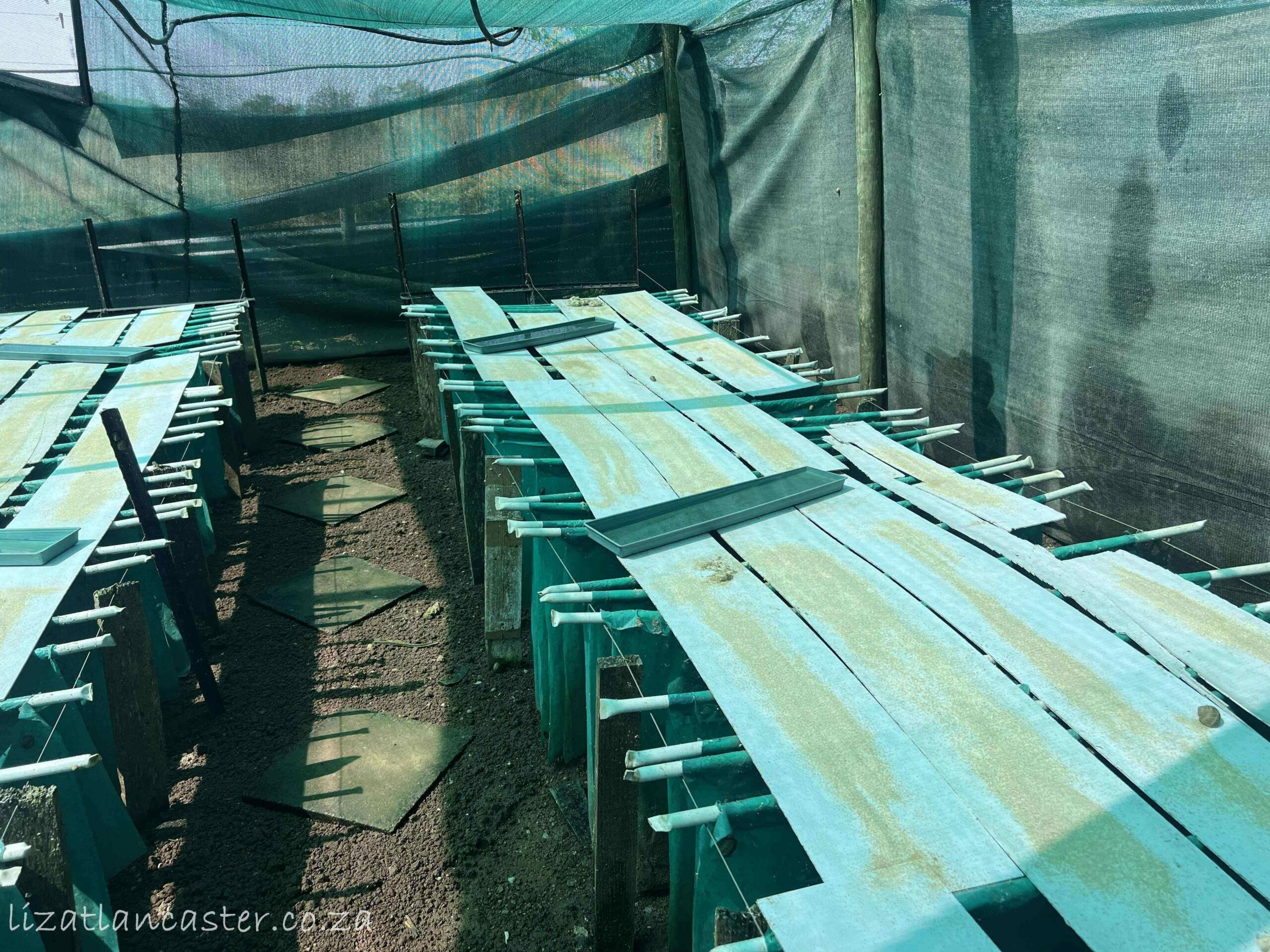
Annie has come a long way since those early days. One of her first challenges was the Highveld climate. European snail-farming methods didn’t translate particularly well to Africa’s hotter, drier conditions. The shade netting wasn’t quite enough protection from the cold winters, so the snails hibernated for longer than expected. In summer, they needed considerably more humidity.
The solution was surprisingly simple: an automated fine-spray system. Now, when the snails are woken in the evening by the misting, they climb the vertical “curtains” to the horizontal planks where their food is spread.
The set-up is remarkably simple. There is a soil floor, the snails poop, and earthworms do the cleaning-up, vacuuming up the poop and aerating the soil so that it remains soft and friable for hibernation.
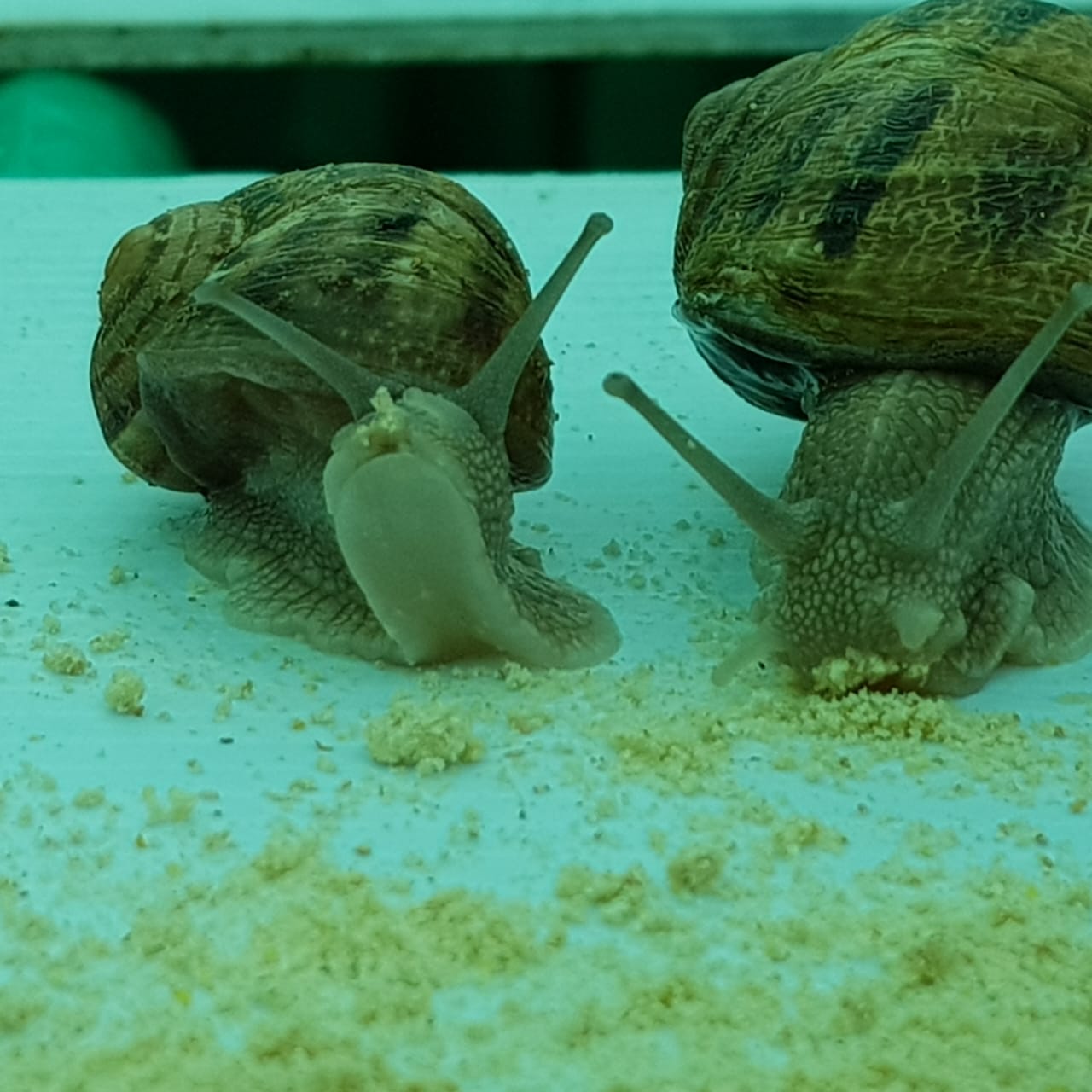
Five years asleep. Then up and about.
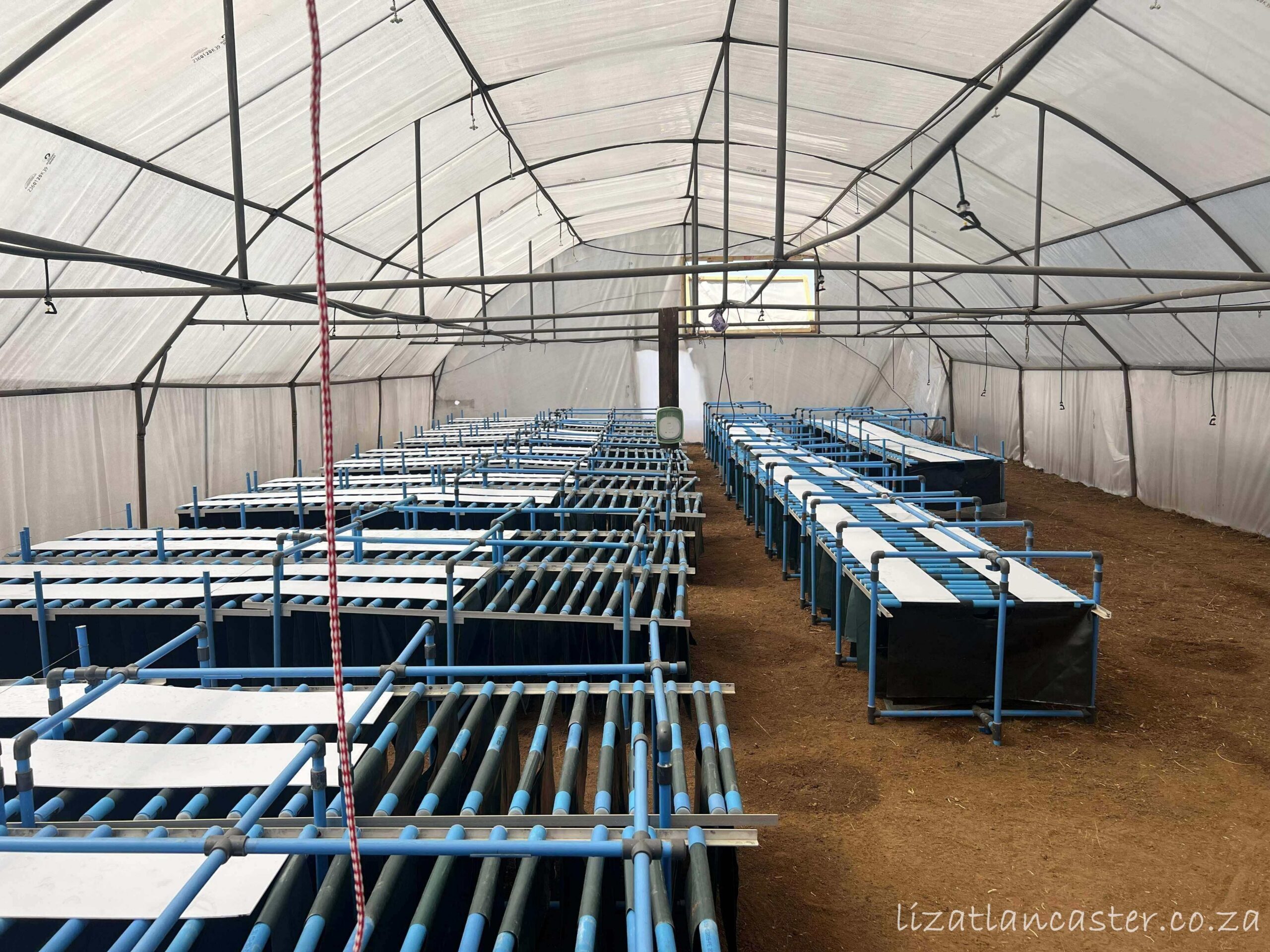
Annie then took us to her new state-of-the-art enclosure, which she calls her Sandton Snail House. Here the plastic covering, rather than shade netting, makes it easier to control the temperature and humidity so shortening the snails’ winter hibernation and giving them the right conditions for their nocturnal habits!
Annie told us about a museum in England where a snail was part of a standard display, everyone assuming it was a standard lifeless museum exhibit. To curators’ astonishment, five years later, with a change in climate conditions, the snail woke up and slowly made its way around the display case.
Love, snails and Cupid’s dart
Naturally, we all wanted to know how mating works when you’re a hermaphrodite. Annie asked if we were ready for this. Of course. Pray tell.
At around seven months, snails reach sexual maturity. When two decide the time is right, they embark on a courtship dance. Watching them, I suspect this is closer to a geriatric soft-shoe shuffle than anything remotely resembling Strictly Come Dancing.
The love dance can last three to four hours. When they are sufficiently fired up, one shoots the other with a “Cupid’s love dart”. Annie gave a beginners’ guide to snail-mating by telling us that initially both snails are male but that the “love dart” acts like a hormone injection determining which partner will carry and lay the eggs. With my scant knowledge of the intricacies of snail physiology and mating habits, I accept this as a more-or-less accurate summary of the shift from male to female. The actual mating can take anything between 16 and 24 hours. And the female stops eating for anything up to 10 or 12 days after mating and before laying the 80 -100 eggs, which takes about 3 days.
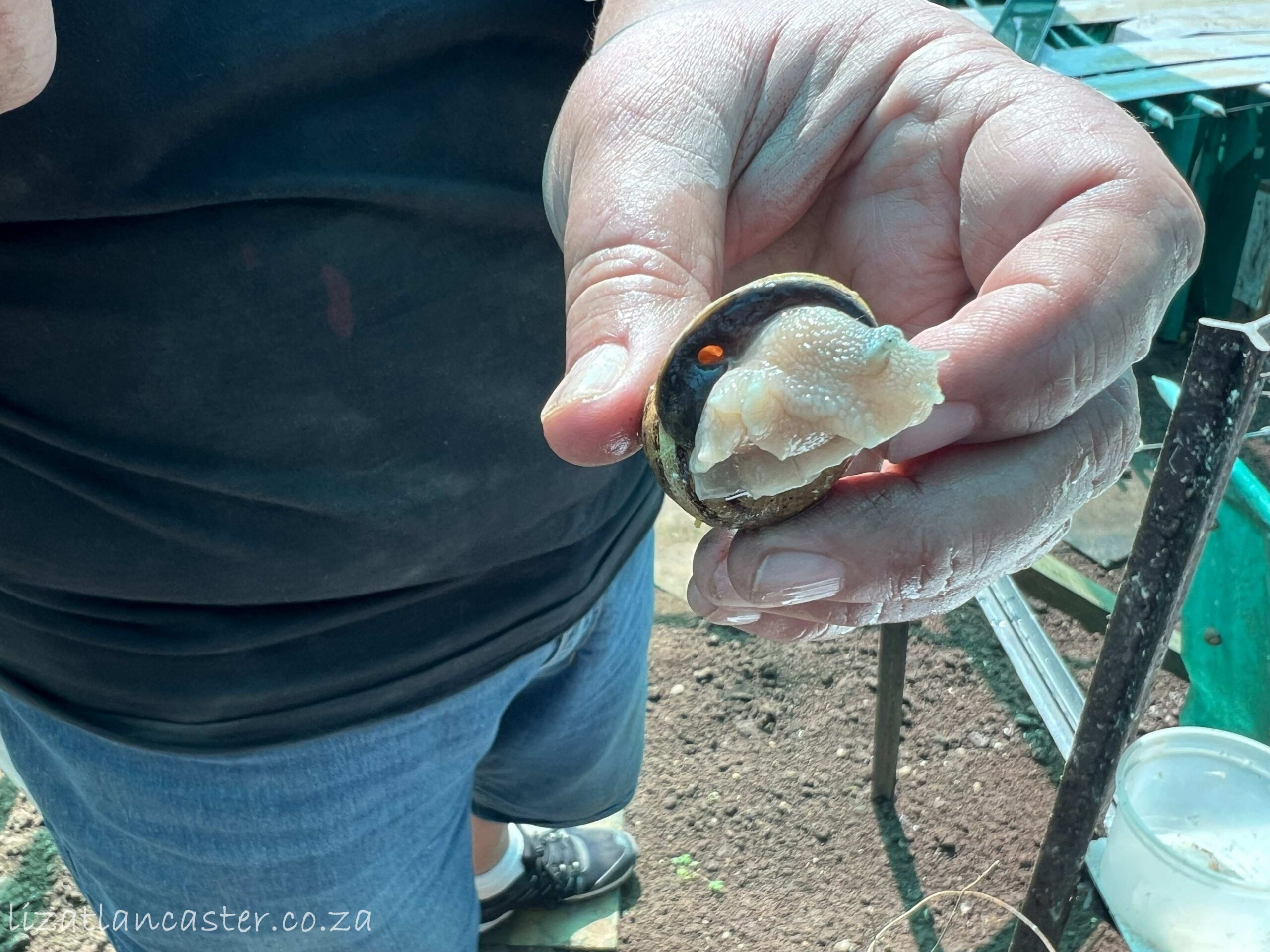
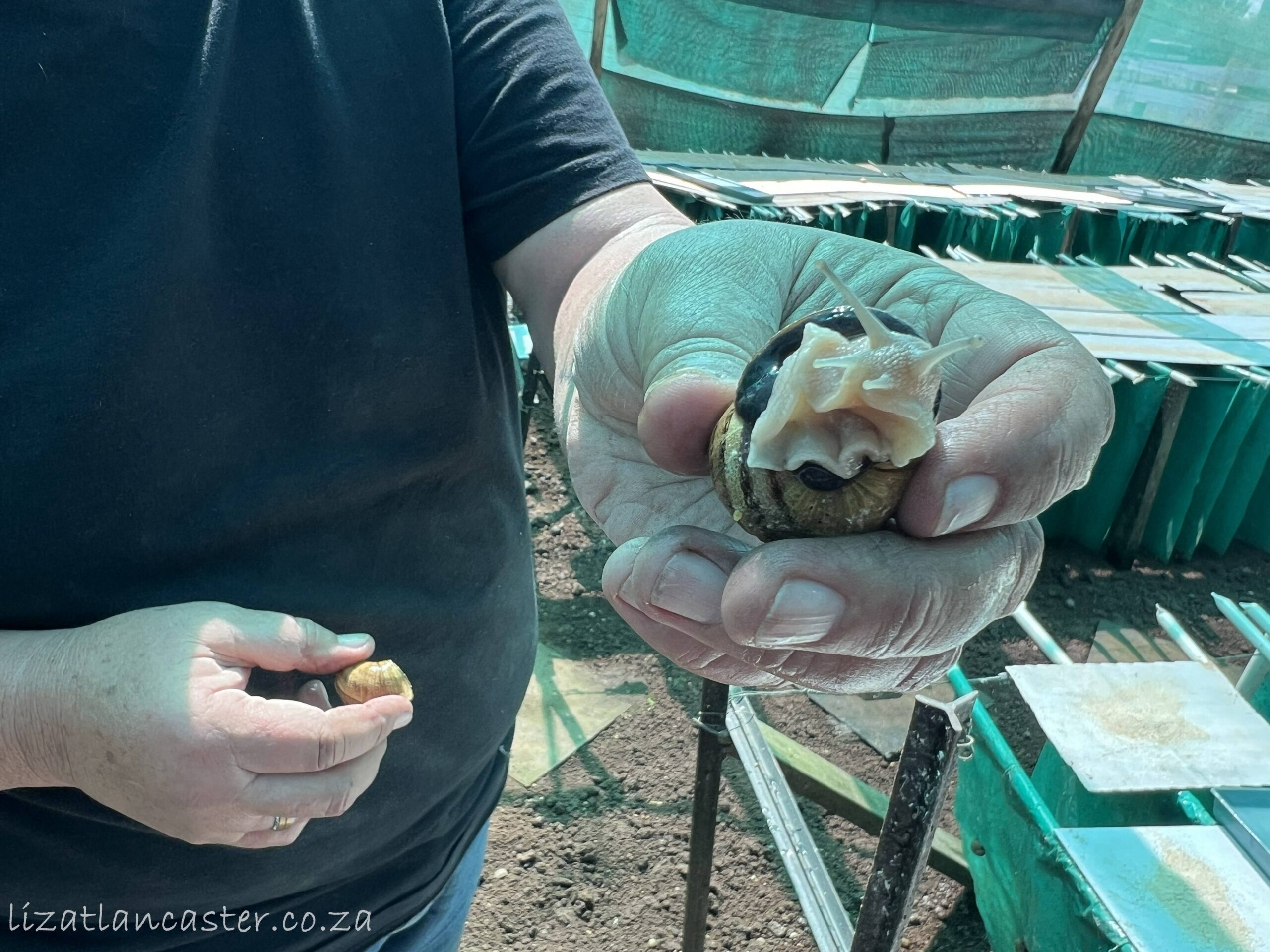
We asked how long a snail lives. In our gardens, Annie says, about six years. On the farm, only about two. Being rudely woken every evening by a fine mist of moisture, having easy access to sexual partners and indulging in constant lengthy mating can, understandably, take a few years off a snail’s life.
Annie has plans
Snails as a source of food
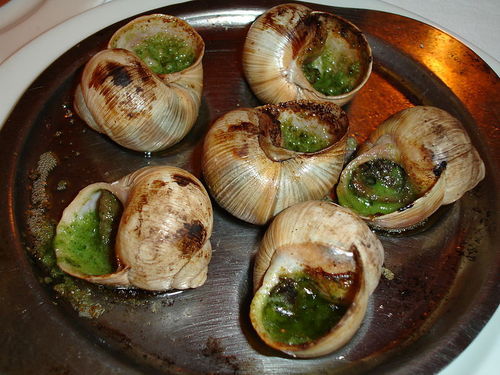
Snails are a wonderful source of food — high in protein and low in fat — and, of course, in high-end restaurants, a great excuse for garlic and butter. Annie already supplies some restaurants, although there is currently no canning factory for snails in South Africa.
The cosmetic side of the business.
The mucin that snails excrete as a protective measure has become increasingly popular as an ingredient in skincare products. It seems there is evidence that it combats wrinkles, heal scars, wounds and burns, as well as stretch marks and acne. It can be collected without harming the snails, and Helix SA has developed its own skincare product, Kono Kono.
But Annie’s ambitions go beyond selling snails and snail-derived products.
Skills Development for small scale farmers
She is passionate about passing on what she has learnt and helping small farmers develop viable farming businesses. Snail farming doesn’t require massive tracts of land, and the potential numbers are impressive: according to Annie, 300 square metres can eventually sustain up to 500,000 snails which equates to an astonishing 10 tons.
Through Helix SA’s AgriSETA-approved training, she can train outgrowers — farmers who grow the snails and then sell them back to her for harvesting and processing.
The problem, as with so many small farming ventures, is getting started. The infrastructure and initial investment are substantial, and funding is difficult to come by.
So Annie is still making plans — and, true to the “’n boer maak ’n plan” philosophy, she seems unlikely to stop anytime soon.
Snails: It’s Not All Lettuce and Lazing About
We arrived knowing very little about snails and left knowing far more than any of us had ever expected to know — including rather too much about their sex lives.
And I have to say, I shall never again look at the humble snail inching its way across my garden in quite the same light. It may be slow, slimy and intent on eating my plants, but it has a surprisingly complicated life.
Not bad for something that carries its house on its back and spends most of its time doing absolutely nothing.
Although, after learning what goes on when it does wake up, perhaps “doing nothing” is rather unfair.