
The Barbican Penthouse: Rooms with a view
Thanks to Johannesburg Heritage Foundation I recently had a wonderful opportunity to visit to 2 iconic buildings in Jozi CBD (Central Business District).
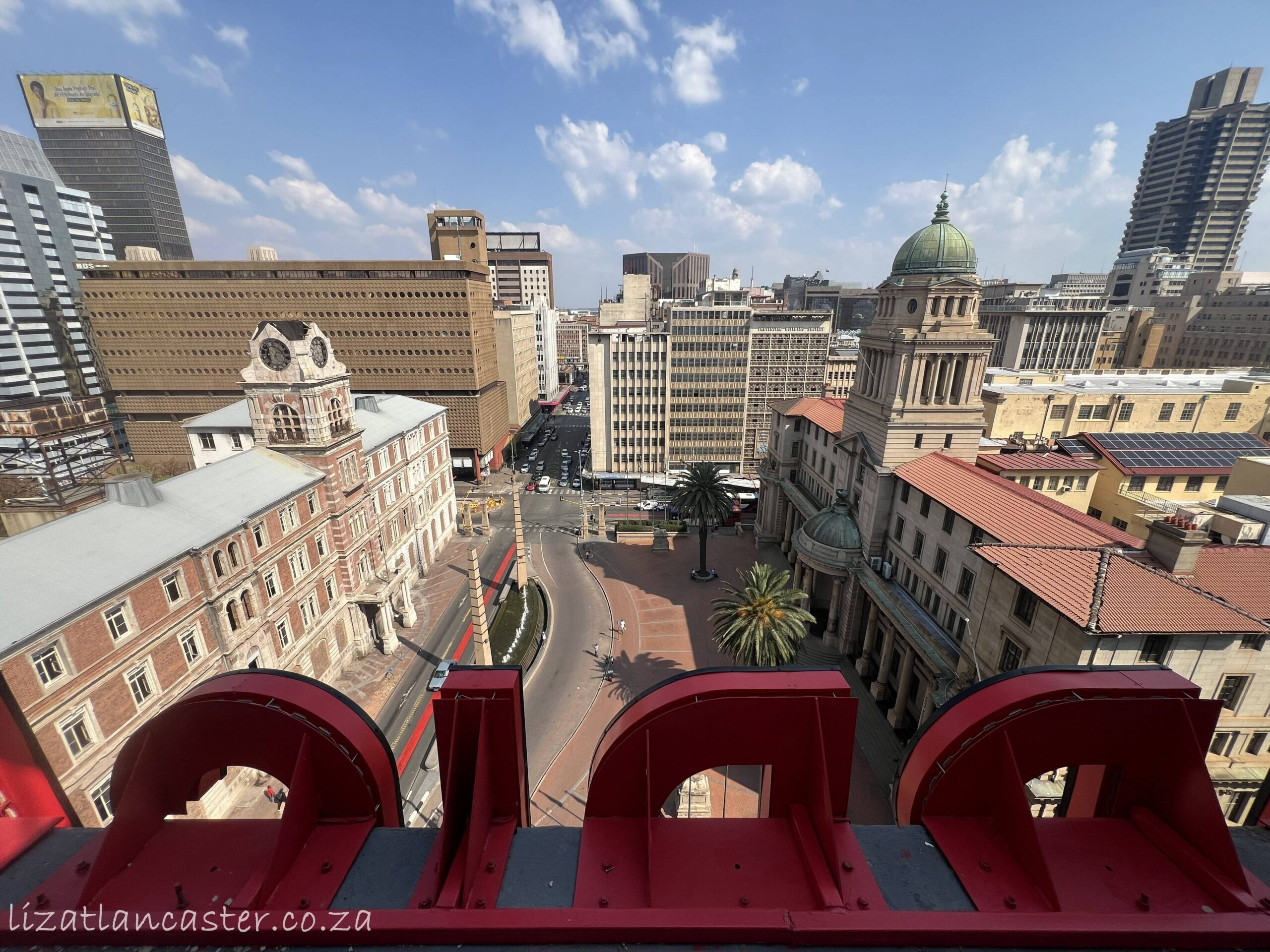
The Late 19th century under the Zuid Afrikaanse Republiek (later the Transvaal)
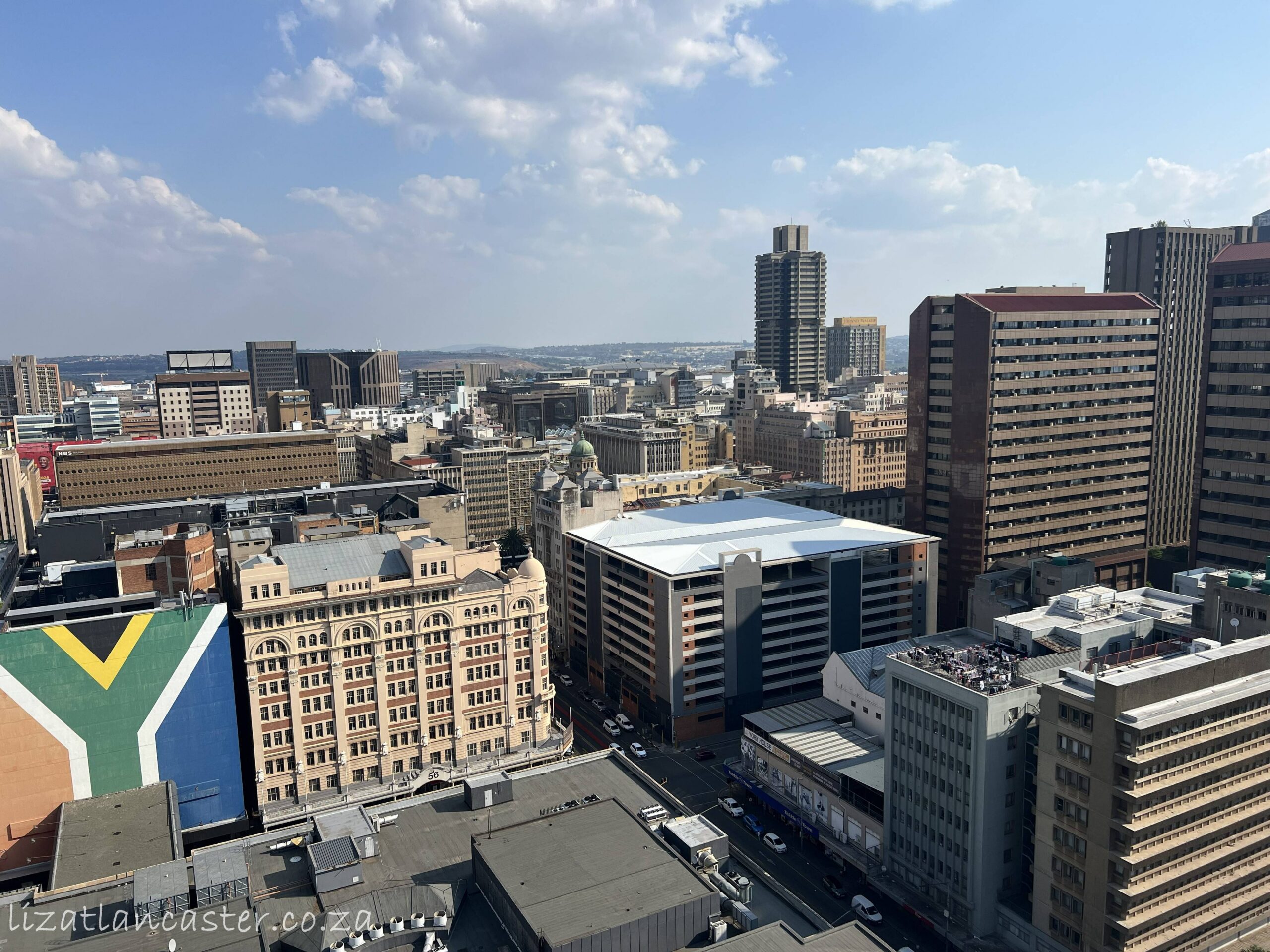
Looking south on the left is the Rissik Street Post Office. Built in 1897 under Paul Kruger and the Zuid Afrikaanse Republiek, (before the union of South Africa as a British Dominion in 1910), it is one of the oldest and most important heritage buildings. It became a national monument in 1978.
Standing empty since 1996, and despite various attempts at restoration, it has been allowed to fall into state of decay and dilapidation with most of the fittings having been vandalized or stolen. From the early gold rush days of Boer republics to the current mismanagement of heritage assets, this is but one narrative thread in Joburg’s history.
From ZAR pre-Union days to British rule
The Edwardian classicism of the 1914 City Hall on the right, declares the presence of a British identity. Home to the City Council once Johannesburg was declared a city in 1928, the building is now occupied by the Gauteng Provincial Legislature.
1930s – looking to America
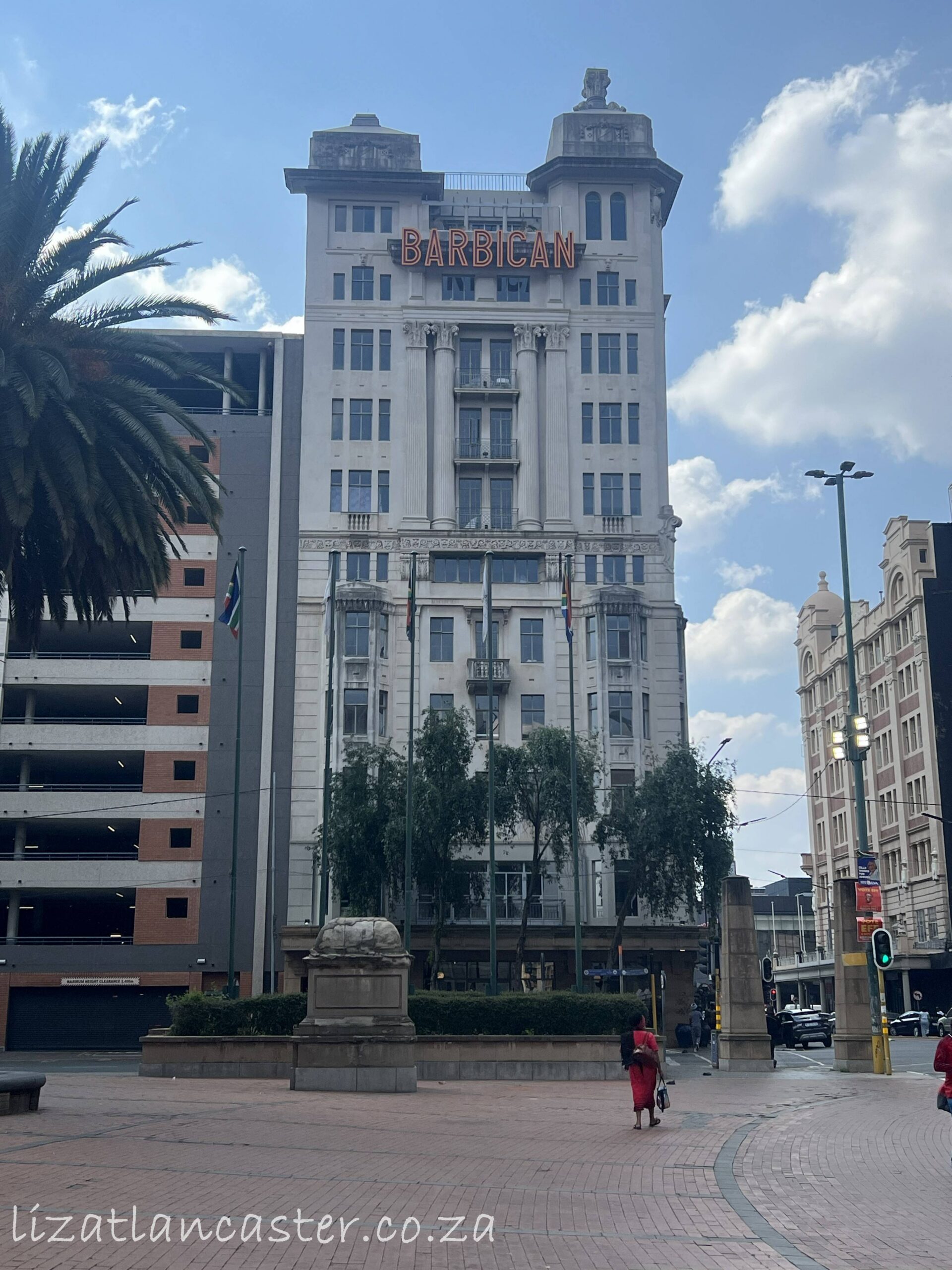
Next in Joburg’s chronology comes the Barbican. Built between 1929 and 1931, this building signaled an era when post-Edwardian Englishness was passé, and Johannesburg was looking towards the modernity of America. With its stylistic mix of eclectic classicism and Art Deco it modelled itself on the skyscrapers of New York and Chicago. The jazzy new neon sign is testament to this influence.
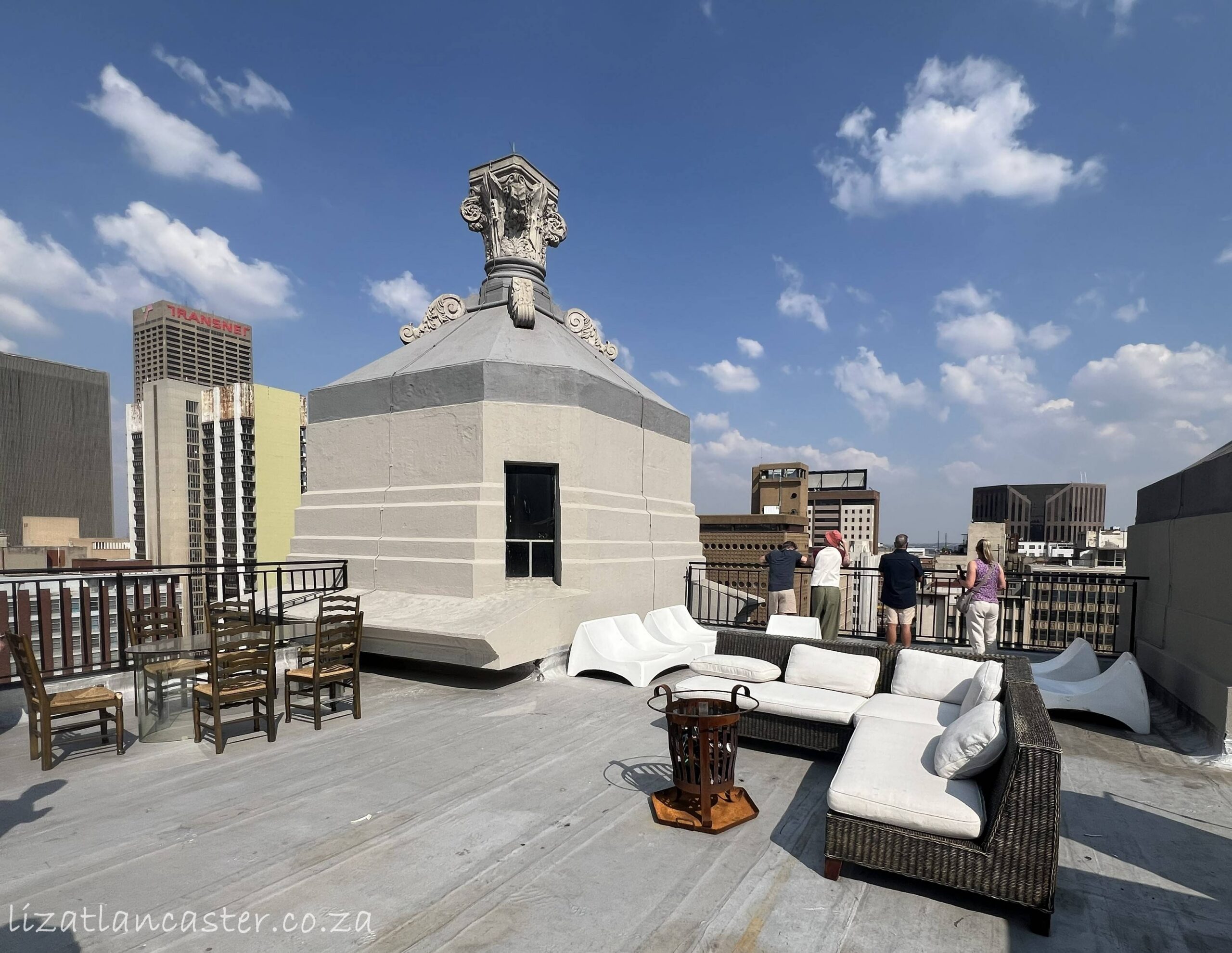
And the new tenants, from Bridge Books on the ground floor, to David Tlale fashion on the 3 floors above, and then Michele Ciani‘s penthouse flat speak to the revitalization of the Jozi’s CBD in the 2020’s in a new hip urban way.
International Style Modernism under the new Afrikaner Nationalist state during the ’50s and ’60s
The two buildings straight ahead speak to the new International Style Modernism of the late 1950s and 1960s when South Africa, under Afrikaner nationalism, was positioning itself as a modern industrial state which could hold its own amongst Western countries. On the right is the modular style high rise Provincial Building Society building and on the left the NBS building in a more brutalist style.
A bird’s-eye history lesson – from the Boer republic and British Empire to Art Deco, apartheid-era modernism and today’s attempts to breathe new life into the CBD – all in one view.
Rooms with a view

Ansteys: another iconic Jozi building
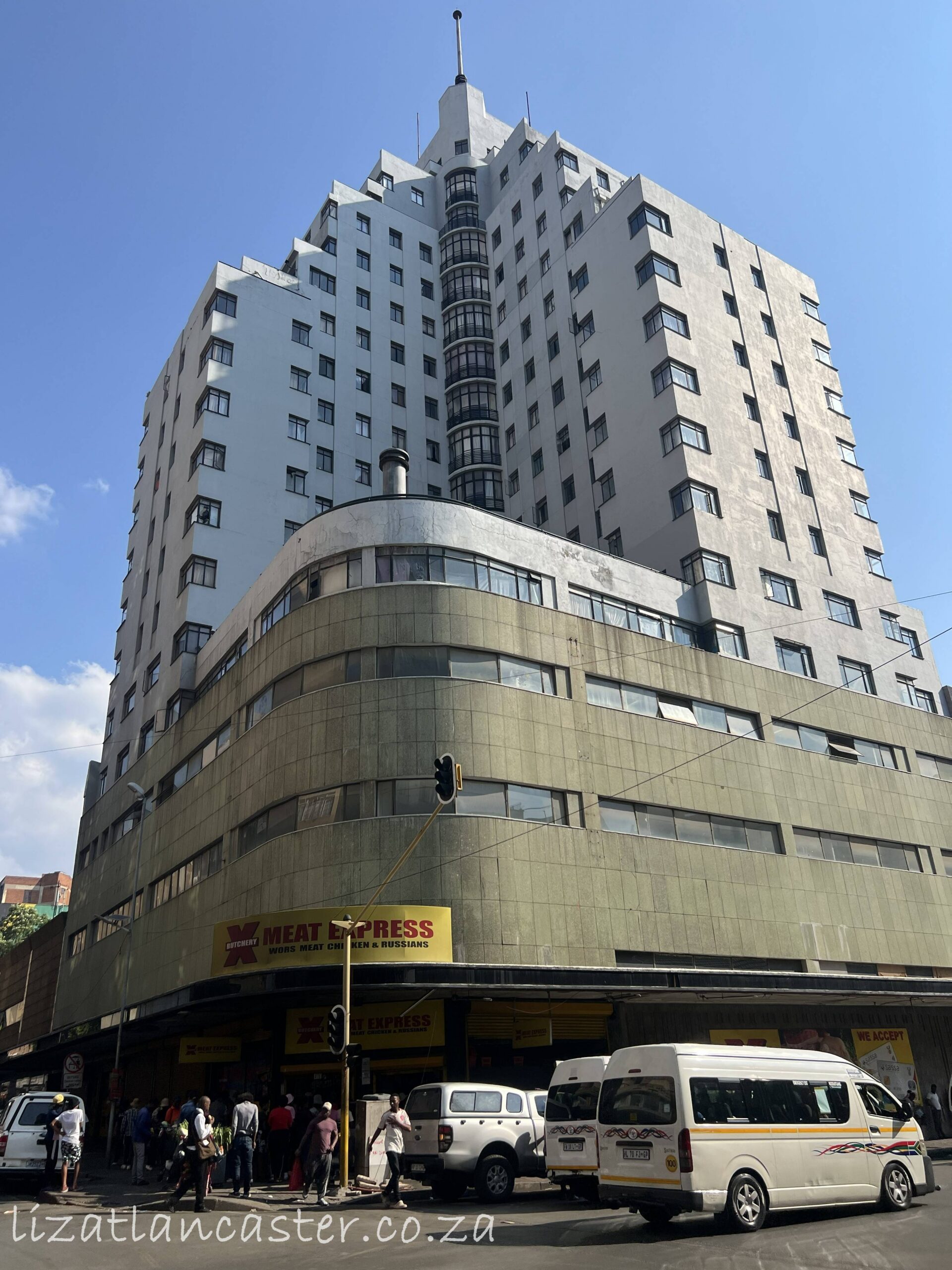
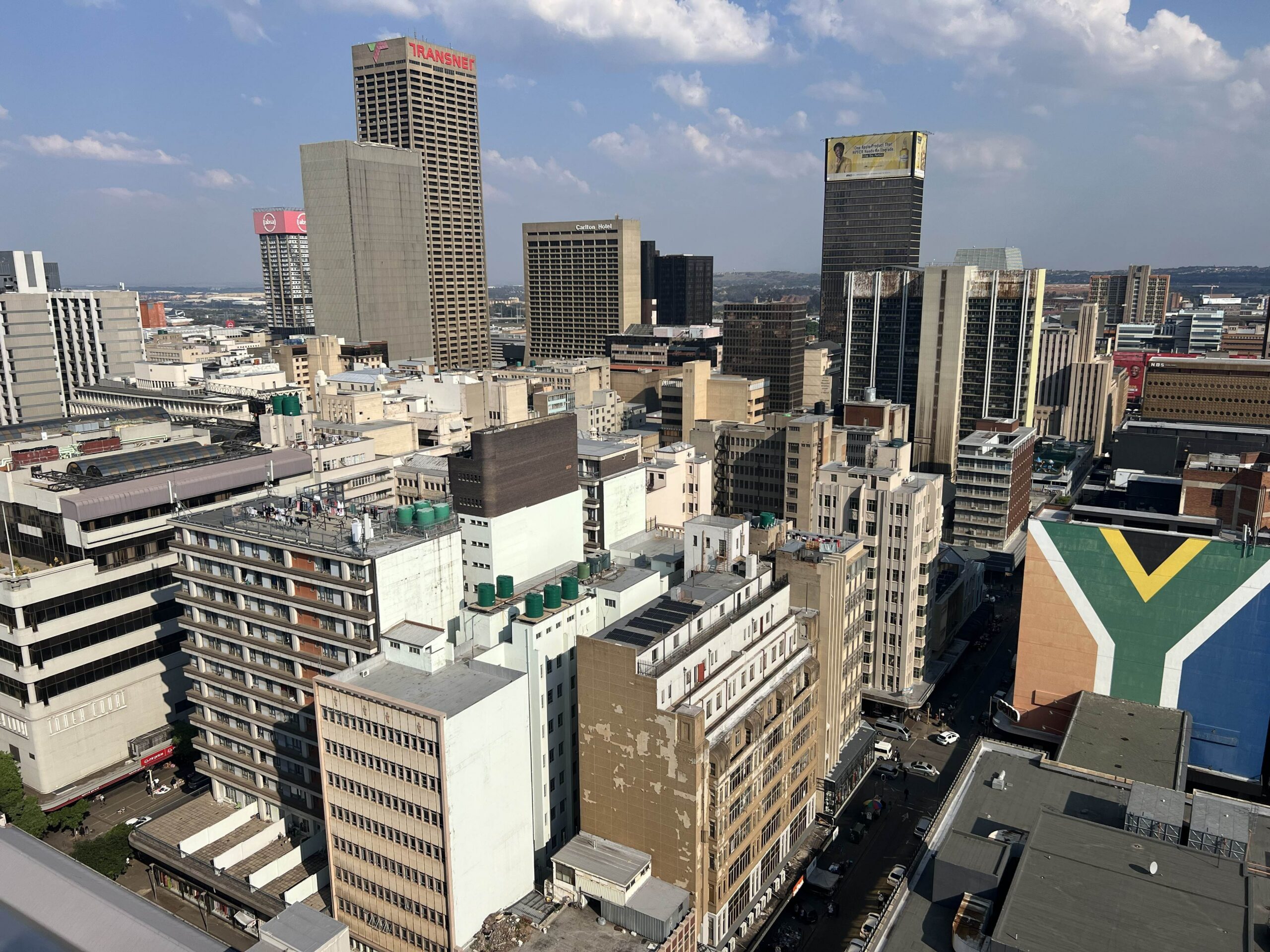
I also wrote about Ansteys in a previous post. This visit we took the lift straight to the 16th Floor before walking up the fire escape for our rooftop 360 degree view of Jozi Central.
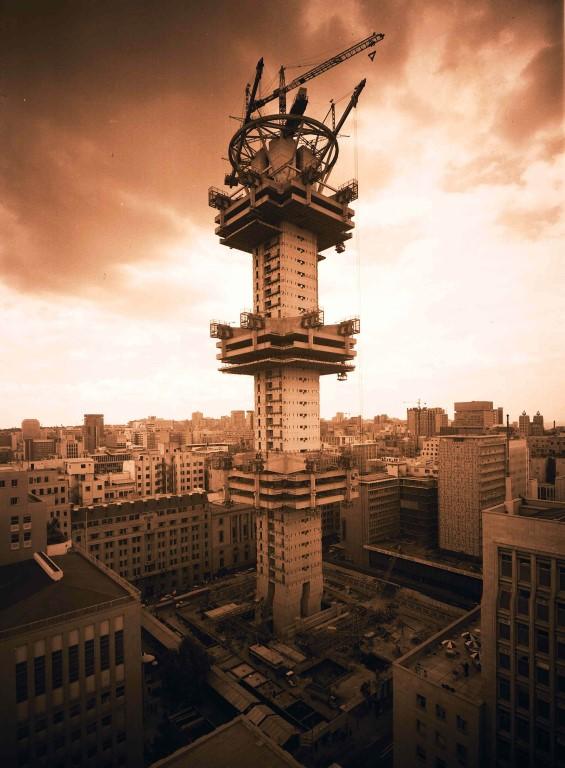
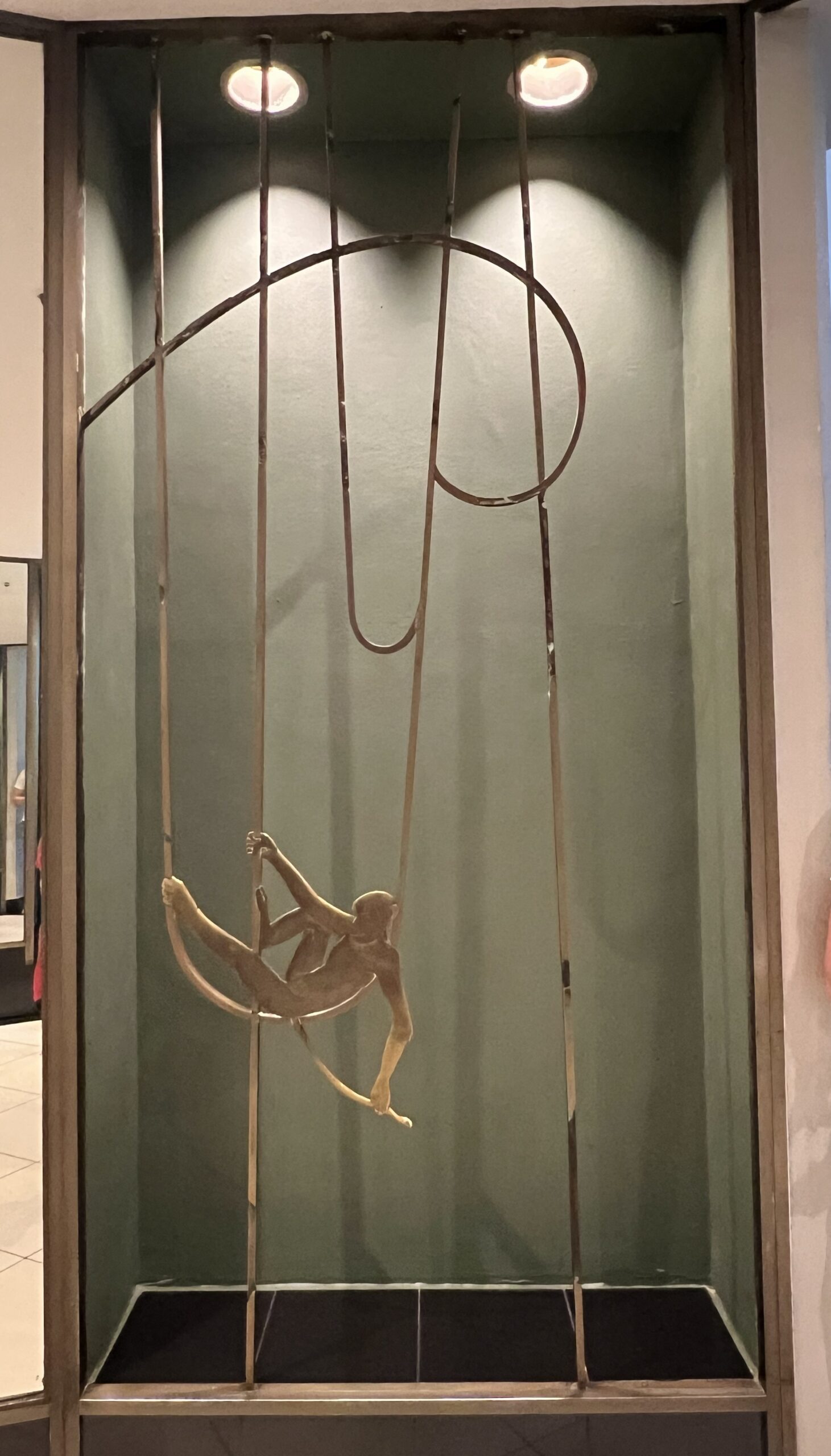
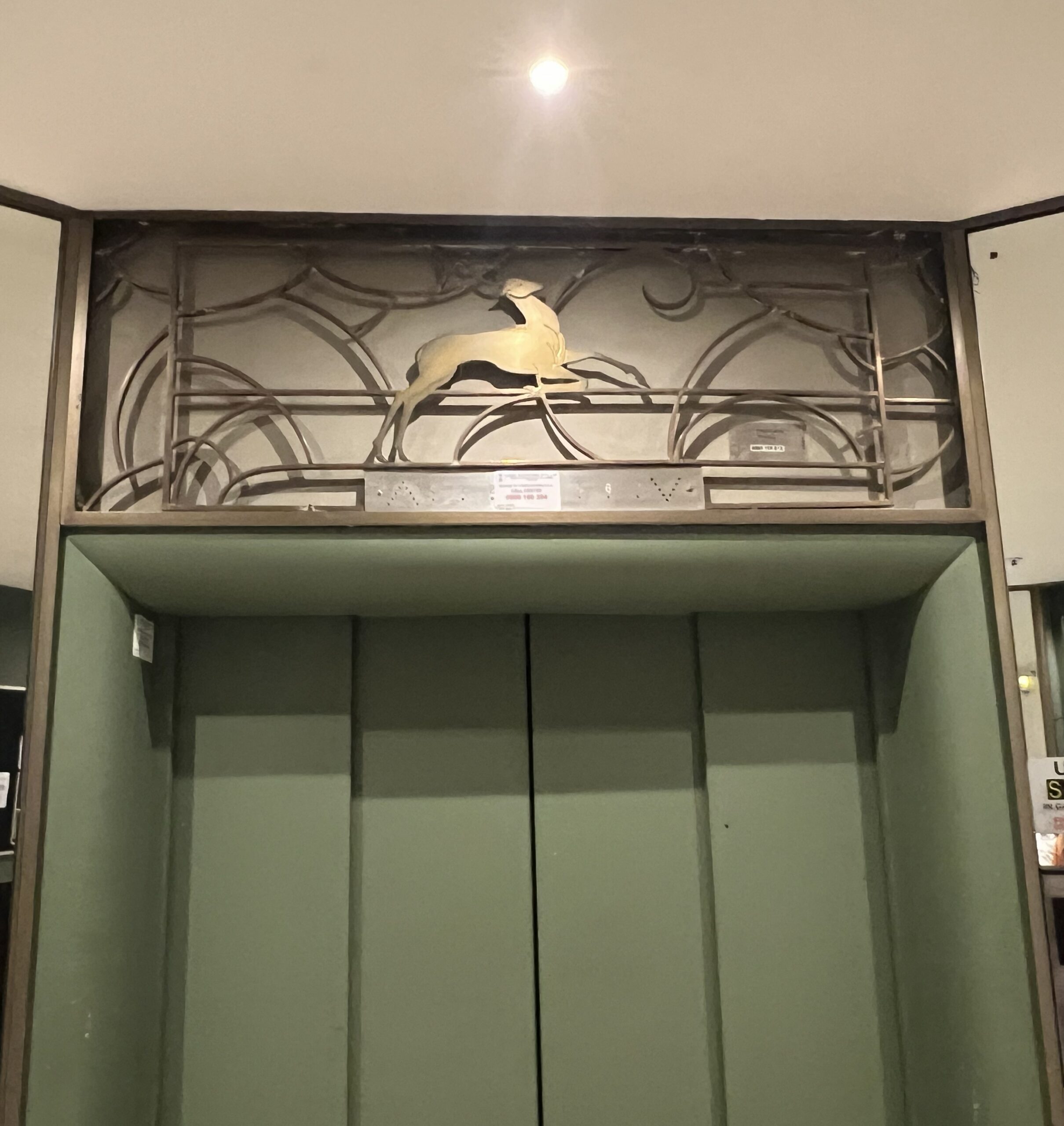
Wonderful art deco detailing
Two iconic buildings, two rooftop views and over a century of Johannesburg history spread out below. It’s a useful reminder that the CBD isn’t simply a collection of old buildings: it is a city in layers, with each generation leaving its architectural and political mark. And from up here, those layers make a pretty impressive view.